COFFEE PACKAGING MATERIALS

Coffee Packaging Materials & Barrier Structures

We help you choose coffee bag materials for protection, printing and heat sealing. Compare foil, metallized film, PE-based structures and kraft-paper laminates, with samples and material information from our team.

Foil, metallized film, PE-based structures and paper composites offer different starting points. Bring your current bag, a material specification or an initial idea, and we can discuss how it fits a custom flat bottom bag, stand up pouch or side gusset bag.

Free design. Unlimited revisions. Free layered production files after approval.

Still choosing a format? Compare coffee bag formats.

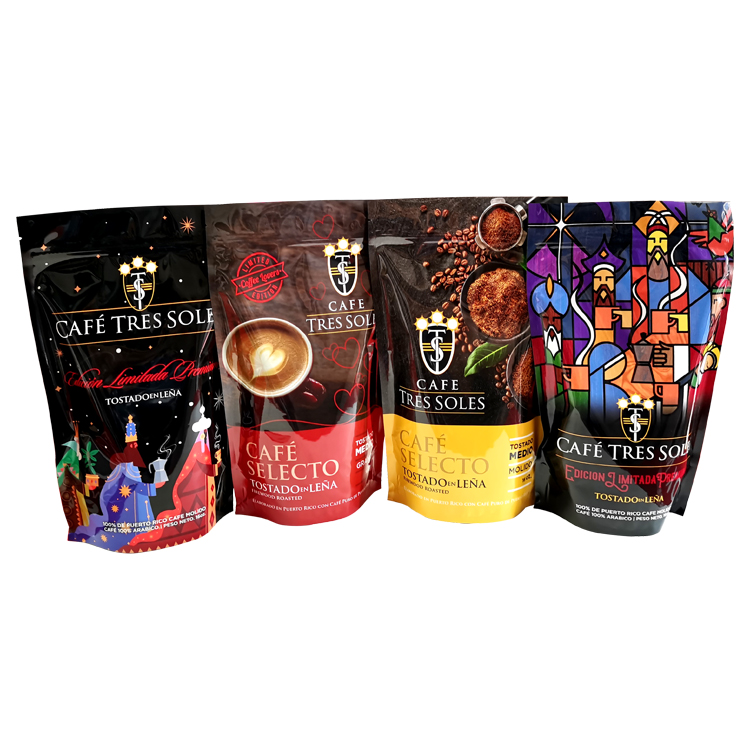
Four printed stand up coffee pouches with colorful front designs
Our digitally printed PET/VMPET/PE stand-up coffee pouches with degassing valves.

YOUR COFFEE, YOUR CONDITIONS

What does your coffee packaging need to do?

A useful material brief starts with the coffee and the way it reaches the customer. Whole beans and ground coffee, a local retail shelf and a longer distribution route may lead to different questions about the package.

Describe the protection you need, the handling the bag will face and your intended unopened storage period. If you already have acceptance criteria or a test report, include them so we can discuss the same requirements.

Oxygen

Set out the oxygen protection you need and any relevant specification. Review the material together with filling conditions and the finished bag.

Moisture

Explain where the coffee will be packed, stored and sold. Include expected humidity or distribution conditions when you have them.

Light and appearance

Decide whether you want an opaque bag or a visible product area. Balance the visual brief with the protection required by your project.

Handling and sealing

Consider transport, filling equipment, the bag opening and the seal. A material choice must work as a package through the process you actually use.

Five details to share

  1. Your coffee: whole beans or ground, target net weight and any relevant product information.
  2. Your route to market: retail, direct delivery, wholesale or another channel, plus intended storage conditions.
  3. Your bag: preferred format, dimensions if known, valve, zipper and any window requirement.
  4. Your filling process: manual or machine filling, sealing equipment and any planned gas flushing.
  5. Your reference: an existing bag, material code, test report or documents you need.

You do not need every answer before contacting us. Tell us what is known and what you are still deciding.

Discuss my material brief.

READ THE COMPLETE STRUCTURE

Each part of the structure has a job.

A coffee bag can combine materials to support printing, provide protection and create a sealable inner surface. The structure name is a useful reference, but a purchasing specification also needs the actual grades, thicknesses, bonding system and intended use.

Functions within a coffee bag materialAn illustration of material functions, not a measured cross-section. Functions can overlap, and a selected structure may contain additional layers or a different arrangement. Outside, Print & support, Barrier function, Seal & food-contact layer, Coffee insideOutsidePrint & supportBarrier functionSeal & food-contact layerCoffee inside

Functions within a coffee bag material

An illustration of material functions, not a measured cross-section. Functions can overlap, and a selected structure may contain additional layers or a different arrangement.

Print and support

The outer part of the structure supports the appearance and handling of the bag. Review the printed finish, surface feel and physical sample together with your artwork.

Barrier function

Barrier layers limit oxygen and moisture transmission and can also block light. We can explain foil, metallized films and other options using the proposed material specification and available test information.

Seal and food contact

The inner surface must suit the intended food contact and sealing process. Confirm the material, the bag opening and the equipment conditions before approving production.

Bonding and conversion

Where materials are laminated, the bonding system and conversion into a finished bag are part of the specification. A list of abbreviations does not describe every component or establish the finished package's performance.

We will explain the layers and thicknesses proposed for your bag before you approve the material.

COMPARE YOUR STARTING POINTS

Four material directions to discuss

These are material structures we have used for coffee bags. We can help you compare their layers and select a construction for your size, finish, valve and closure.

Four material directions to discuss
Material directionMaterials We Have UsedA useful starting point when…Confirm for your project
Foil laminatePET/AL/PEYou want an opaque laminate with an aluminum foil barrier layer.Film and foil thicknesses, handling, seals, accessories and available barrier information.
Metallized film laminatePET/VMPET/PEYou want to review a metallized polyester construction. VMPET is metallized PET film; it is different from an AL foil layer.The actual film specification, appearance, barrier report, sealing surface and finished bag configuration.
PE-based constructionMDOPE/PEYou are exploring a PE-based direction together with performance and end-of-life requirements.Film layers, valve and zipper, material documents and local collection options.
Paper compositeMATOPP/white kraft paper/VMPET/PEYou want a paper component within a printed composite coffee bag.Paper and film layers, surface appearance, protection, heat sealing and disposal information.

Foil and metallized film are different choices.

An aluminum foil layer and a metallized PET film are different constructions. A metallic-looking surface does not identify the structure or establish a barrier value. Compare the actual material documents and samples, and review the complete bag required for your coffee.

Choose the Appearance & Disposal Option Together

We choose the finish, barrier layers and accessories together. If you want recyclable or compostable materials, tell us where you sell your coffee so we can explain the options and relevant disposal conditions.

KNOW WHAT THE REPORT MEASURES

Compare barrier data on the same basis.

Oxygen transmission rate, or OTR, describes oxygen passing through the tested material or package under the stated conditions. Water vapor transmission rate, or WVTR, describes water vapor passing through the specimen under its test conditions. They address different protection questions.

When comparing reports, check the complete test information. A lower value can indicate lower transmission within a comparable test basis; numbers from different methods, conditions or specimen types are not automatically a valid ranking.

Compare barrier data on the same basis.
Report detailWhat to checkWhy it matters for your decision
Material identityStructure, grade, thickness and reference to the proposed material.The report needs to describe what you are actually considering.
Method and conditionsTest method, temperature, humidity and other conditions specified in the report.Conditions affect the meaning of a result and the basis for comparison.
Units and calculation basisThe full unit, including area or package basis and any pressure normalization.Film reports may use volume per area per day for OTR and mass per area per day for WVTR. Do not compare unlike units without a valid conversion.
Specimen and scopeFlat film, converted bag or another specimen, including which accessories are represented.A flat-film result does not automatically include the effects of the finished bag's seals or valve.
Report identityDate, sample reference, testing organization and applicable limitations.These details identify the material tested and show how the report relates to your order.

Material evidence and package evidence answer different questions.

Common technical references include ASTM D3985 for film oxygen transmission and ASTM F1249 for film water-vapor transmission. ASTM F1307 addresses oxygen transmission of dry packages. Ask which method and specimen support the proposed result; a standard number on its own is not a performance value.

A barrier value is not a shelf-life promise.

Your unopened storage target also depends on the coffee, filling conditions, residual oxygen, package configuration, storage and the quality criteria you use. Discuss the validation needed for your own product and process before making a freshness claim.

Share a material specification or report with our team.

FROM MATERIAL TO FINISHED PACKAGING

Review the seals, valve and filling process together.

The selected material needs to work with the bag format and the way you fill and close it. Confirm these details as one project, using samples and your actual process where practical.

Check the sealing setup.

Share the sealing equipment and the bag opening you plan to use. Temperature, pressure, dwell time, seal area and the condition of the sealing surfaces are details to review through appropriate trials. Do not choose a universal setting from the material abbreviation alone.

Seal-strength testing and barrier testing answer different questions. If you need a particular seal test or acceptance requirement, include it in the brief so the relevant evidence can be discussed.

Match the valve and reclosure.

Discuss the valve with the coffee, filling timing, bag material and placement. A degassing valve releases gas from the coffee; it does not remove oxygen already inside the bag or replace the final sealing step.

A zipper supports reclosure after opening. Confirm its position, the original heat seal and the space needed for filling, rather than assuming the zipper provides the same protection as the original unopened package.

Treat a window as part of the material choice.

Tell us where you want a window and what it should show. We will help you choose a transparent area that fits the material, coffee protection and printed layout.

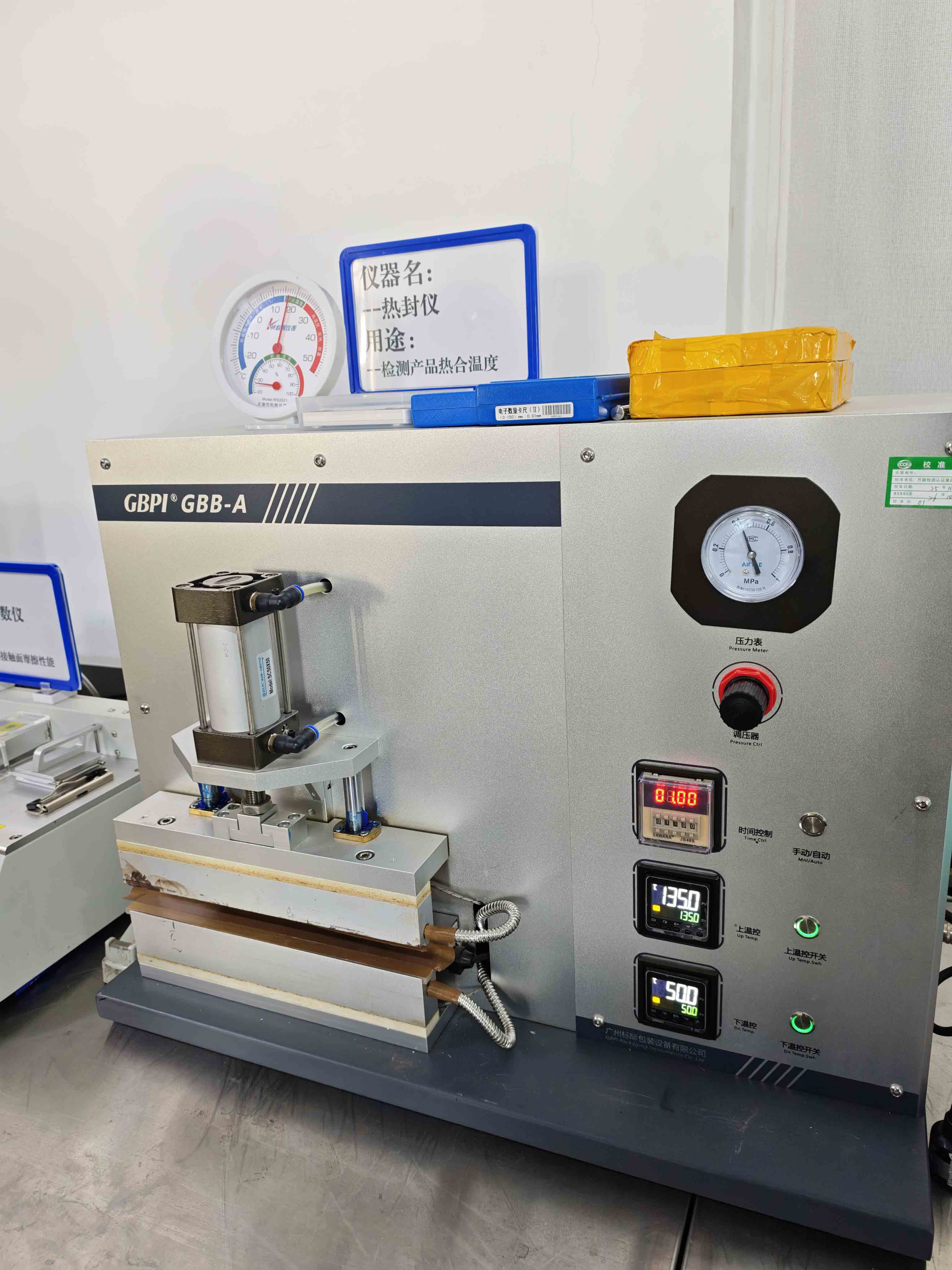
Heat-seal testing equipment with controls and sealing jaws in a quality-control room
Heat-seal testing equipment used in our packaging quality checks.

FREE DESIGN SUPPORT

Make the material choice part of your design.

You can begin with a brand idea, an existing coffee bag or artwork that needs adjustment. We help organize the design around the selected bag format, material appearance and confirmed accessories.

Free design

Share your logo, brand references, product information and preferred appearance. We can help develop a design without requiring a finished production file at the start.

Unlimited revisions

Review and refine the design with us until you approve it. Material selection, colors, finish and the layout of product information should be discussed together.

Free layered production files

After design approval, we prepare the layered production files free of charge. The layout is prepared around the confirmed bag dimensions, panels, sealing areas and accessory positions.

Confirm the physical appearance.

An on-screen mockup helps you review the layout. A physical material or printed sample is the reference for the surface, finish and visible effect you need to approve. Where relevant, discuss opacity, a window and any white-ink requirement before the production artwork is finalized.

Keep environmental wording specific to the evidence available for the complete package. We can help place approved wording within the design; the claim itself needs the appropriate supporting information.

MATERIALS IN COFFEE BAGS WE HAVE MADE

Compare Three Finished Coffee Bag Structures

These finished bags show metallized film, a paper laminate and a PE-based structure. Compare their sizes, printing and accessories, then ask our team about the material details for your own coffee.

PET/VMPET/PE stand up coffee pouches

We digitally printed this 16 oz / 1 lb stand-up pouch using PET/VMPET/PE film and added a valve. It measures 18 × 29 + 5 cm.

We can help you compare this metallized film with other barrier structures and adapt the size and artwork for your coffee.

View the PET/VMPET/PE stand up project.
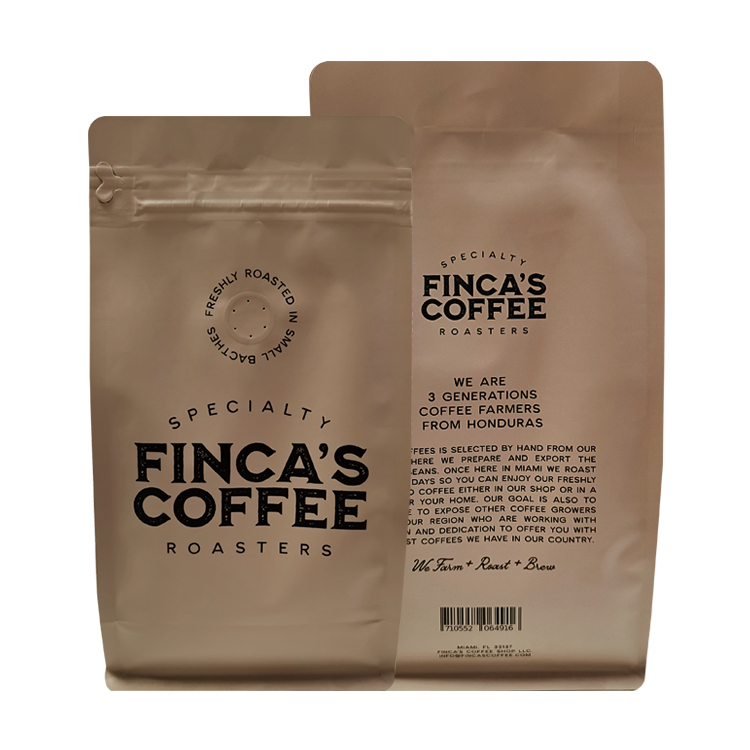
Front and back views of beige printed coffee bags with black lettering
Front and back panels of our gravure printed kraft-paper flat bottom coffee bag.

A paper composite in a flat bottom format

We made this flat bottom bag with gravure printing, MATOPP/white kraft paper/VMPET/PE laminate, a pocket zipper and a valve. It measures 12.7 × 24 + 7.7 cm.

Review the desired appearance through a physical sample and discuss the printing method for your own order.

View the paper-composite flat bottom project.
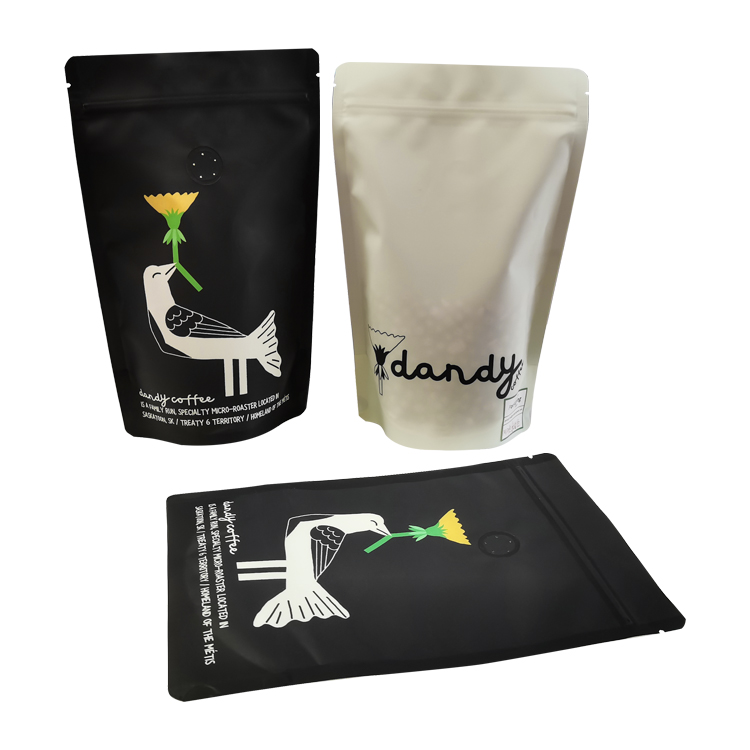
Black and cream printed stand up coffee pouches with bird artwork
Our digitally printed MDOPE/PE stand-up coffee pouches.

An MDOPE/PE stand up coffee pouch

We digitally printed this 12 oz stand-up pouch using MDOPE/PE film and added a valve. The bag measures 15 × 23 + 5 cm, showing a PE-based alternative to the other structures.

If you are considering a PE-based package, review the complete specification, accessories, protection evidence and local collection conditions for your own market.

View the MDOPE/PE stand up project.

Your coffee, dimensions and configuration still need their own sample review.

Browse coffee packaging projects.

BUILD A CLEAR MATERIAL SPECIFICATION

Use samples and documents before approving production.

Start with the right sample.

Similar material samples are free. Tell us which structure, finish or handling characteristic you want to review so we can discuss the relevant sample.

Custom samples have a fee, refunded when you place the order. Confirm what the custom sample will represent, its cost and timing for your project.

Use an appropriate sample to check filling space, closure, surface appearance and your equipment setup. A similar sample can help selection, while the agreed production specification still needs its own approval.

Request documents for the intended use.

Material, food-contact and relevant certification documents can be provided on request. Tell us your market, intended use and the exact information you need. Review the scope of each document against the complete proposed packaging, including relevant components.

If a particular transmission value, seal test or other acceptance criterion is required, raise it during the specification discussion. The available evidence and any further verification need to be agreed for the project.

Confirm in four steps.

  1. Share the coffee, material requirements, format and filling process.
  2. Review the structure proposal, available documents and relevant samples.
  3. Confirm dimensions, accessories, appearance and approved production artwork.
  4. Agree the order specification, quotation, schedule and delivery details.

Plan production and delivery.

Production is typically 7–12 days. Shipping is typically 7–10 days, with door-to-door delivery and taxes included. The quotation confirms shipping costs and the timing for your destination; these are planning ranges rather than guaranteed arrival dates.

MATERIAL SELECTION QUESTIONS

Coffee packaging material FAQs

What is the best material for a coffee bag?

Start with the coffee, intended storage conditions, filling process and complete bag requirements. Foil, metallized film, PE-based constructions and paper composites are different directions to review. Share an existing sample or specification if you have one so we can discuss an appropriate structure for your project.

What do PET/AL/PE and PET/VMPET/PE mean?

These abbreviations describe the layer order. PET is polyester, AL is aluminum foil, VMPET is metallized PET film and PE is polyethylene. Ask us for the film grades, thicknesses and laminate details proposed for your bag.

Is metallized PET the same as aluminum foil?

They are different constructions. Metallized PET has a deposited metal layer on PET film; an AL foil layer is aluminum foil. Compare the actual specifications and relevant evidence for the complete bag rather than choosing by a metallic appearance.

What are OTR and WVTR?

OTR is oxygen transmission rate; WVTR is water vapor transmission rate. They describe different substances passing through a tested specimen under stated conditions. Check the method, full units, temperature, humidity and sample identity before interpreting or comparing a result.

Does a flat-film barrier report cover a finished bag with a valve?

The report applies to its stated specimen and scope. A flat-film measurement does not automatically include the converted bag, seals or valve. If you require finished-package evidence, describe the configuration and acceptance requirement so the relevant verification can be discussed.

Can you tell me the coffee's shelf life from the material code?

A structure code alone cannot establish your shelf life. The coffee, filling conditions, residual oxygen, complete packaging, storage and quality criteria also matter. Share your target unopened storage period and discuss validation for your own product and process.

Can a coffee bag have a transparent window?

Share the location, size and purpose of the window. Visibility needs to be considered with the material construction, protection requirements and artwork. We will discuss the feasible configuration for your project; a clear area is not itself evidence of a particular barrier value.

Does a kraft appearance mean the bag is only paper or compostable?

Kraft-paper bags use film layers for protection and heat sealing. We can explain those layers and help you compare conventional, recyclable and compostable material options for your order.

Does a degassing valve replace the need for a heat seal?

A valve releases gas from the coffee. It does not replace the closing and sealing process, and it does not remove oxygen already in the bag. Review the valve, initial seal, filling process and any zipper as separate functions within one package.

Are all PE-based coffee bags recyclable everywhere?

Collection rules vary by program and location. We can share the complete film and accessory details so you can check acceptance with the program in your sales area before adding recycling instructions.

Can I get a sample before deciding on a material?

Similar material samples are free. Custom samples have a fee that is refunded when you place the order. Explain what you want to evaluate so the sample scope, any cost and timing can be confirmed.

Can you help if I do not have finished artwork?

Yes. Share a logo, brand idea, current bag or reference. We provide free design with unlimited revisions and prepare the layered production files free of charge after approval, around the confirmed material, bag layout and accessories.

Can you provide food-contact or certification documents?

Yes. Tell us your market, intended use and the material you are considering. We can share the relevant factory and food-contact documents and explain which materials and uses they cover.

What are the MOQ, price and lead time for a custom material structure?

MOQ and price are quoted against the actual format, dimensions, material, print requirements, quantity and accessories. Production is typically 7–12 days and shipping 7–10 days. Share your destination and target date so the quotation can confirm the project schedule and delivery costs.

START WITH THE INFORMATION YOU HAVE

Let's specify your next coffee package.

Send your coffee type, target net weight, bag format, quantity and destination. Include a material code or report reference if you have one, and tell us about any current sample, valve, zipper, window or storage requirement.

Tell us the protection and appearance you want. We can help you compare materials, arrange samples, create the design and prepare a quote.

Use the Message field to describe your coffee, material requirements and bag configuration. Mention any available sample or report so we can agree how to review it.