
Valve
Manages gas release through its one-way mechanism.
CUSTOM EMPTY COFFEE BAGS · VALVES & FREE DESIGN
We make custom coffee bags with one-way degassing valves. Our team helps you choose a valve for your coffee and film, then positions it around the filling space, closure and printed design.
Start with whole beans or ground coffee, your target fill and how you pack after roasting. An existing bag, a logo or a simple project idea is enough to begin.
Free design. Unlimited revisions. Free layered production files after design approval.
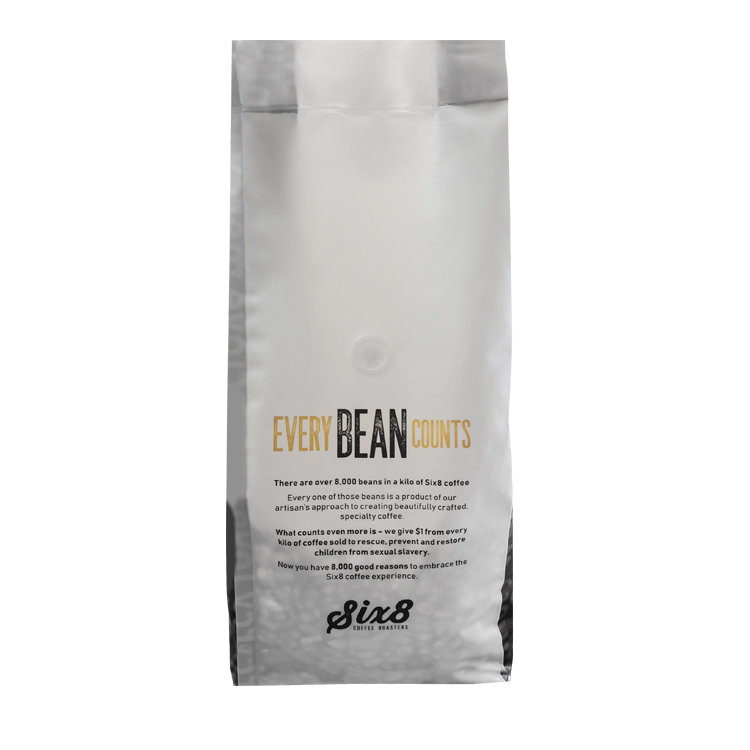
UNDERSTAND THE ONE-WAY FUNCTION
Roasted coffee releases carbon dioxide after roasting. In a sealed bag, accumulating gas can raise internal pressure. A one-way degassing valve provides a controlled path for that gas to leave.
The valve opens when the pressure difference reaches its specified opening condition and closes as the pressure falls. It is designed to restrict outside air from flowing back through the valve within its performance limits.
Valve performance depends on the selected model and its application to the bag. Review the relevant specifications and sample rather than treating every valve as identical.
Manages gas release through its one-way mechanism.
Provides the selected material barrier around the coffee.
Closes the filled bag with the agreed heat seal.
Gas release and valve closing
Two simplified states show gas leaving a sealed coffee bag through a one-way valve and the valve closing to restrict reverse airflow. No pressure values or internal valve components are specified.
START WITH YOUR COFFEE AND PROCESS
Coffee form, roast profile and the interval before packing affect the gas-release discussion. Grinding changes how coffee releases gas, so a whole-bean specification should not automatically be reused for ground coffee.
There is no single waiting period in this guide for every roast or packing process. Tell us your intended conditions and confirm the proposed package with your actual coffee.
| Your packing situation | Information to share | What to confirm |
|---|---|---|
| Freshly roasted whole beans | Roast profile, time before packing, target weight and bag format. | Gas-release needs, valve specification and the sealed sample. |
| Ground coffee | Grind, timing after grinding, target weight and filling method. | Whether the selected valve needs suitable particle protection and how it performs with the product. |
| Coffee rested before packing | How the coffee is held, the packing interval and intended storage. | Whether a valve is appropriate for those conditions; elapsed time alone is not approval. |
| An existing package you want to improve | Bag reference, material, valve position and the issue you observed. | Which part of the complete package needs review before a new specification is approved. |
Tell us your roast-to-pack timing and coffee type. We can help you choose the valve and plan a sample check for your packing conditions.
AGREE THE LOCATION ON THE DRAWING
Discuss the valve position with the bag format, intended fill level, seals, folds and selected reclosure. Review access to the valve area and any applicable clearance requirements on the project drawing and sample.
We can place the valve on the front or back, depending on the bag and packing process. Our designers keep logos, product text, labels and codes clear of that area.
Check the coffee level, filling path and handling of the selected valve area.
Mark the valve position alongside the top seal, folds and any zipper or other reclosure.
Check the logo, product text, labels and codes against the agreed position.
Valve position within the bag layout
A symbolic bag identifies the top seal, selected closure, intended coffee level, valve position to agree and artwork area to review. The drawing does not specify a distance or universally preferred location.
REVIEW THE COMPLETE BAG
Agree the valve and its application together with the bag material and sealing requirements. A valve is one component of the package; it does not replace the bag barrier or a sound final seal.
For recyclable or compostable materials, we select the valve with the film and closure. Ask us about compatible components and the disposal information for your chosen bag.
Relevant factory certificates and supporting food-contact documentation are available on request. Share your intended market so we can provide the applicable documents directly.
| Packaging direction | Details to review | Supporting information |
|---|---|---|
| Conventional barrier structures | Selected film structure, valve model, application and final seal. | Project specifications and applicable material or valve information. |
| Recyclable packaging direction | Complete material structure, valve, reclosure and intended collection route. | Relevant documentation for the proposed complete package and destination. |
| Compostable packaging direction | Complete bag structure, valve, reclosure and the intended composting route. | Applicable supporting documents for the proposed package and intended market. |
We can explain the proposed film and valve and share the relevant documents available for the finished construction.
CONNECT THE SPECIFICATION WITH A PHYSICAL SAMPLE
Use the proposed bag and valve sample to connect the drawing with your packing conditions. Agree which sample, coffee and observations will be used in the review.
Use a sample to check the valve position and bag handling. If you need opening-pressure, leakage or other measured performance information, tell us the test requirements before approving the specification.
Free samples of similar materials are available. Custom sample fees are refunded when you place an order. Confirm sample preparation, shipping and the required review with the quote.
Record the bag format, dimensions, material, valve and selected closure being reviewed.
Compare the valve position and attachment with the drawing. Note visible damage or any area that needs further review.
Use your actual coffee, target fill and packing method. Keep the agreed seal area clear and check the filled package.
Review handling and storage under the conditions agreed for your sample. Record changes in bag shape or other concerns for assessment.
Keep the sample reference, observations, required changes and agreed specification together before approval.
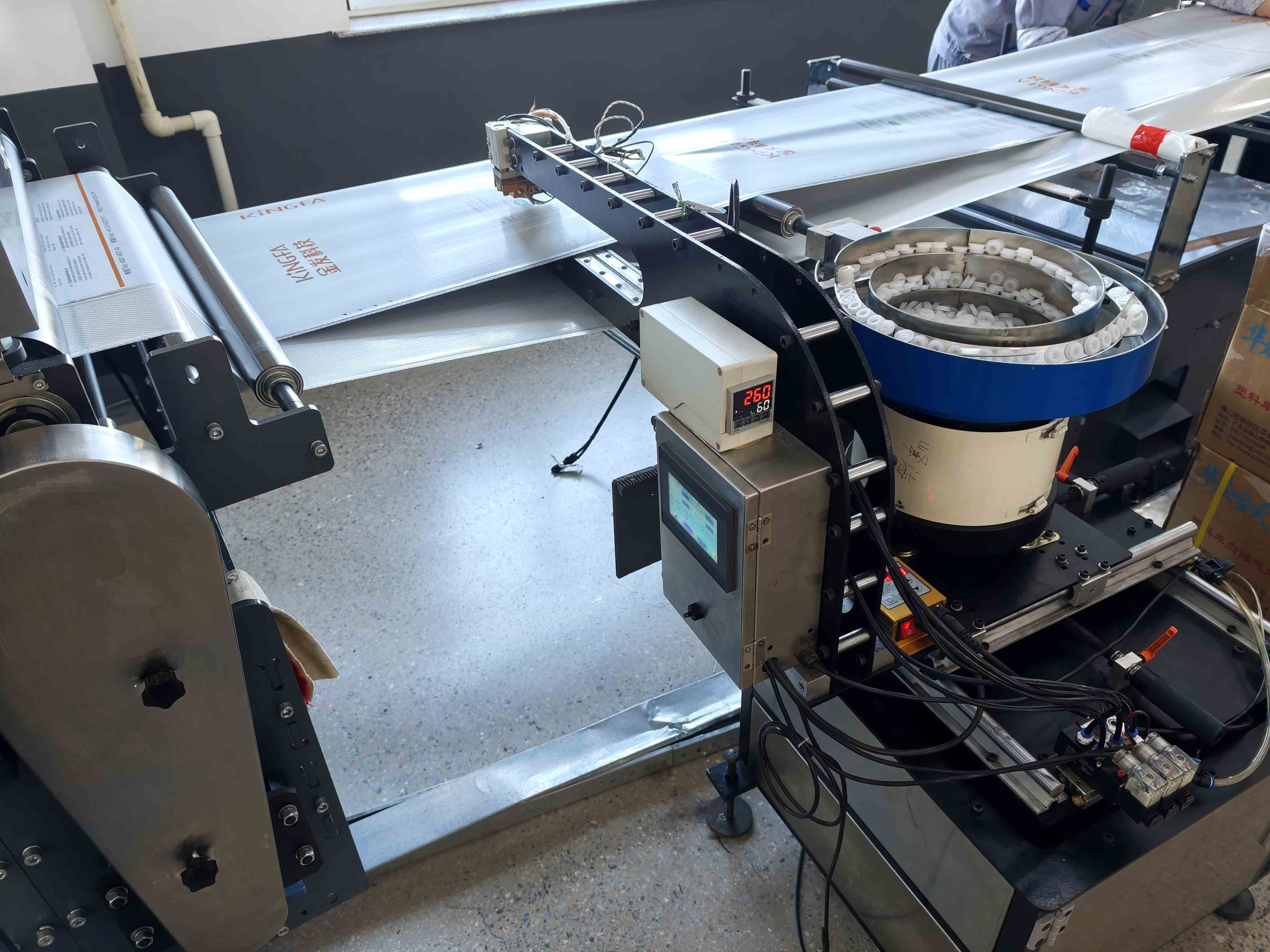
FREE DESIGN & LAYERED FILES
You can begin with a logo, an existing package or a design idea. We provide free coffee packaging design with unlimited revisions while you review the bag specification.
Review the design on the agreed bag template, including the valve area, folds, seals and selected closure. Check key text and code positions before approving the artwork.
After design approval, we prepare free layered production files for the agreed bag and printing requirements. Physical sample preparation and printing setup remain separate quotation items.
Send a logo, coffee range or reference design and the packing details you know.
Connect the artwork with the selected bag format, dimensions and valve position.
Receive free layered production files after you approve the design.
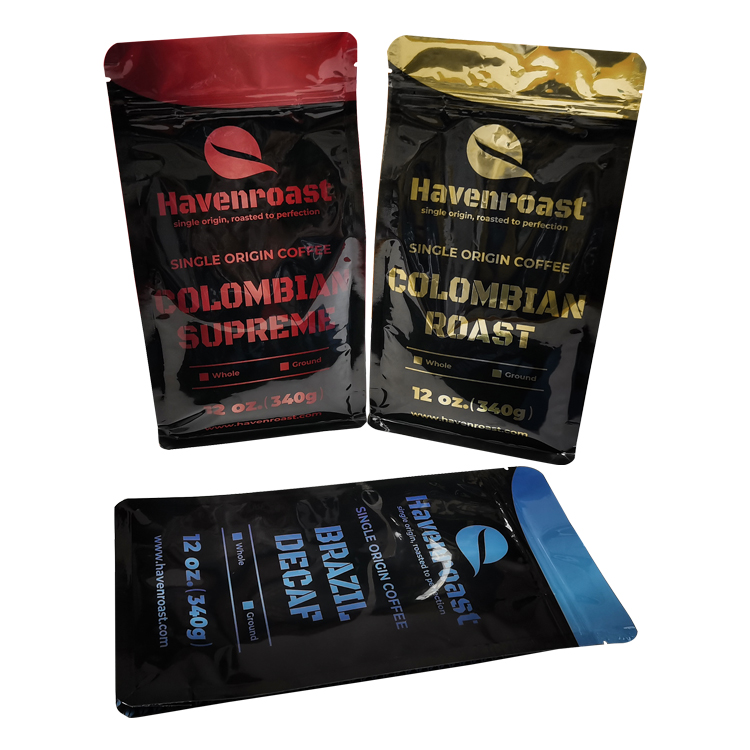
VALVED COFFEE BAGS WE HAVE MADE
We have made valved bags in side gusset, flat bottom and stand-up formats. Compare their sizes, materials and closures, then tell us which combination you want for your coffee.
We made this 14 × 40 + 7.5 cm side gusset bag with gravure printing, MDOPE/PE film and a PE valve for 1 kg beans.
View the Side Gusset Valve ProjectWe digitally printed this 12.7 × 23.5 + 6 cm flat bottom bag with PET/VMPET/PE film and a valve for 12 oz beans.
View the Flat Bottom Coffee Bag ProjectWe digitally printed this 15 × 23 + 5 cm kraft-paper pouch for 250 g coffee and added a valve and zipper.
View the Stand Up Valve & Zipper Project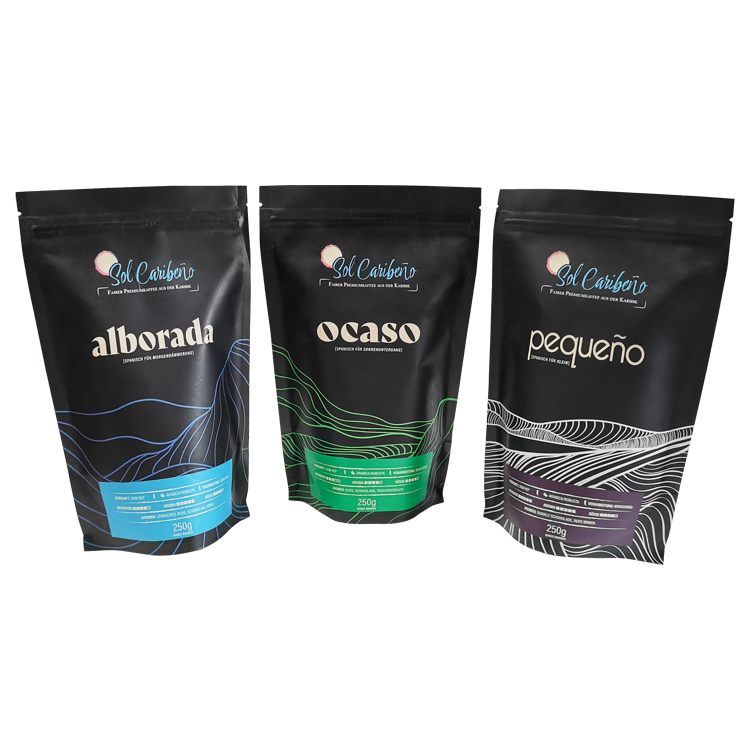
COFFEE BAG VALVES FAQ
Use these answers to prepare the discussion. Final valve, material, placement and sample requirements are agreed for your coffee and packing conditions.
It is a one-way device that provides an outlet for gases released by roasted coffee inside a sealed bag. Review its specification as part of the complete package.
No. A one-way valve has a mechanism intended to vent gas and restrict reverse airflow. An opening alone does not provide that valve function.
Freshly roasted beans continue to release carbon dioxide. Discuss a suitable valve with your roast-to-pack timing, target fill, material and intended packing conditions.
Ground coffee requires its own review. Share the grind and packing interval, and confirm whether the selected valve needs suitable particle protection for the product.
The suitable interval depends on the roast, coffee form and packing process. Tell us your intended timing, and we can help you select the bag and valve. Check the package with your coffee under those conditions.
Agree the position on the project drawing with the fill level, seals, folds, closure and artwork. A position used on another bag is not a universal clearance specification.
The valve releases gas, the film provides barrier protection and the final heat seal closes the filling opening. We select these together, and you still need to heat-seal the bag after filling.
No. Valve designs and specifications differ. Ask which model and relevant performance information are proposed for the bag rather than assuming a shared opening pressure or flow capability.
Yes. We have made PE-based bags with PE valves and paper/PLA bags with PLA valves. We can help you select compatible components and explain the material information for your intended disposal option.
Record the sample, coffee, packing interval, fill, seal and conditions when you noticed the change. Share those details for assessment. Bag appearance alone does not identify the cause or establish a valve test result.
A valve does not set a guaranteed shelf life for an opened bag. Follow your coffee storage instructions and review the selected reclosure. Opening and reclosure are separate from the initial sealed package.
Yes. Free samples of similar materials are available, and custom sample fees are refunded when you place an order. Confirm the sample specification, preparation, shipping and review requirements with the quote.
Yes. We provide free design with unlimited revisions. Review the artwork on the agreed template, including the valve, folds, seals and closure. Free layered production files are prepared after design approval.
Send the coffee form, roast-to-pack timing, target fill, bag format, material and accessory requirements, quantities per design, artwork status and destination. Tell us which details you need help deciding.
START WITH THE DETAILS YOU KNOW
Tell us about your coffee, packing method and bag idea. We can help you bring the valve, material, size, artwork and sample requirements together for a useful quotation.
Free design with unlimited revisions. Free layered production files after design approval.
Whole beans or ground coffee, roast-to-pack timing, target weight and filling method.
Format, known dimensions, material direction, valve and reclosure requirements.
Logo or references if available, quantities per design, sample needs and destination.
Confirm MOQ, price, physical samples and printing setup for the selected specification. Production takes 7–12 days and shipping takes 7–10 days. Door-to-door delivery is available with taxes included; confirm the project arrangements with the quote.
We are a US coffee roaster planning 12 oz flat bottom bags for whole beans. We pack after roasting and would like help reviewing a one-way valve, bag material, valve position and samples. We have a logo but no finished artwork. Please help us with free design, quantities per design and a quote for door-to-door delivery with taxes included.
Tell us about your coffee and packing process. We can help you choose the valve and bag before you have finished artwork.