
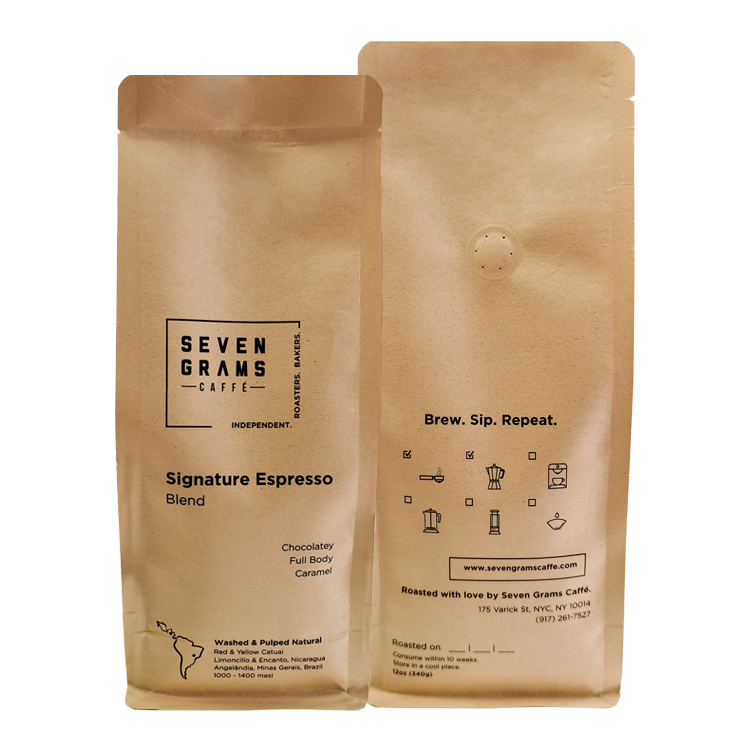
You can want a visible paper surface, a specific material direction or a disposal option for your customers. Those are useful priorities, but they describe different decisions. Tell us which one matters most so we can compare the actual bag layers, size and features for your coffee.
This guide explains the structures behind several bags we have produced. It also shows how to keep a kraft design connected to filling, sealing, opening and accurate wording on the finished package.
Start with the complete structure, not the kraft label
Paper appearance and functional layers
A coffee bag needs more than a preferred surface. Its construction must suit your coffee protection requirements, printing, forming and closing process. In a paper laminate, the paper is one component alongside the films and bonding system selected for the finished bag.
Ask for the complete proposed structure. Include coatings, films and accessories in that discussion rather than treating the word kraft as a full material specification. If you are changing an existing bag, provide its structure if you have it, and explain which physical or material requirement you want to change.
A brown surface can be left visible or printed. White kraft can also carry a fuller printed design. The appearance you choose does not have to reveal every layer beneath it, which is why your inquiry should pair the reference image with a written material request.
For a structure overview, use our materials and barrier structures page. The useful purchasing question is which layers and features are proposed for your particular bag, not whether two photographs share a paper-like color.
Read the material abbreviations
Our examples use precise layer names. VMPET means metallized PET: PET film with a deposited metal layer. It is different from a separate AL aluminum foil layer. PE identifies polyethylene, and the MATOPP layer identifies the matte oriented polypropylene component used in these specifications.
Keep the full notation in your comparison. A bag described as MATOPP / Kraft Paper / VMPET / PE includes plastic film layers around its paper component. A White Kraft Paper / PLA structure has a different polymer lining. Neither description means the finished bag is made only from paper.
| Structure detail | What it tells you | What to specify for your order |
|---|---|---|
| Kraft Paper or White Kraft Paper | A paper component | Paper appearance and the complete laminate |
| MATOPP | The specified matte polypropylene film component | Surface, structure and printing arrangement |
| VMPET | Metallized PET film | Its place in the complete construction |
| PE | Polyethylene layer | The agreed material and sealing requirements |
| PLA | Polylactic acid polymer | The exact proposed lining or film and component information |
| PLA (PLA+PBAT) | A PLA-based specification with the stated blend note | Retain the complete description in the order |
Thickness is another field. Total film thickness and the thickness of a particular lining should retain their own names. A coffee net weight such as 12 oz, approximately 340 g, belongs to the fill specification and should never be used as a film-thickness description.
Compare kraft coffee bags we have made
A 12 oz kraft flat bottom bag
We made our kraft flat bottom bag for 12 oz coffee in 10.5 × 26.5 + 8 cm. It uses MATOPP / Kraft Paper / VMPET / PE at 140 µm, gravure printing and a degassing valve.
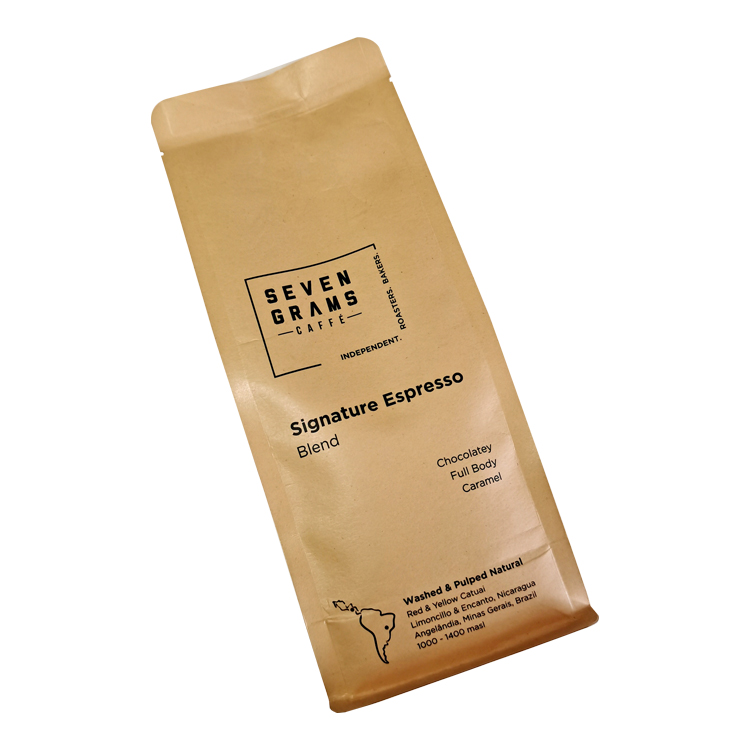
For your own bag, this is a useful reference when the paper appearance is central to the design. You can ask us to compare artwork coverage, panel proportions and the material structure. The presence of kraft paper and the presence of polymer layers are both part of this configuration.
Choose its size as a reference, then try your own coffee and packing sequence. A familiar net weight does not guarantee the same filled level for every product or leave the same clearance for every closure. If you change the dimensions, review the material and artwork layout with the new drawing.
A kraft stand-up pouch with a film interior
Our kraft stand-up coffee pouch with a valve uses MATOPP / Kraft Paper / VMPET / PE, gravure printing and a degassing valve. Its dimensions are 17 × 24 + 4 cm.
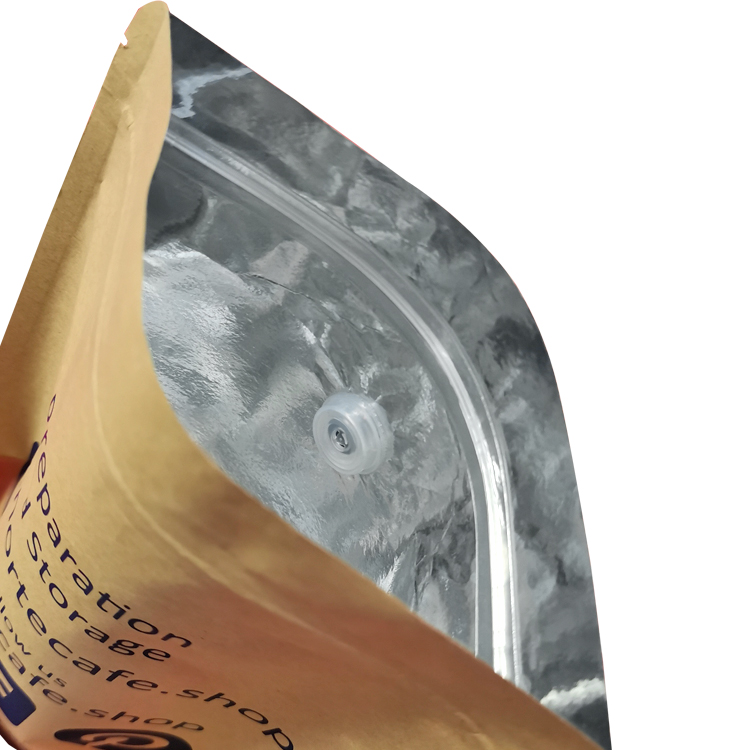
This configuration helps illustrate the distinction between an exterior paper appearance and an interior construction chosen for the bag. Keep VMPET described as metallized PET when discussing this example. A silver-looking interior is not a reason to rename that layer aluminum foil.
For your project, the broad pouch faces can carry the brand and coffee information while the bottom gusset contributes to the filled shape. Discuss the coffee weight, opening and final seal space before arranging the valve and artwork on the approved dimensions.
White kraft in a matte printed flat bottom bag
We made our matte kraft flat bottom bag with a pocket zipper using MATOPP / White Kraft Paper / VMPET / PE. It measures 12.7 × 24 + 7.7 cm and combines gravure printing, a degassing valve and a pocket zipper.
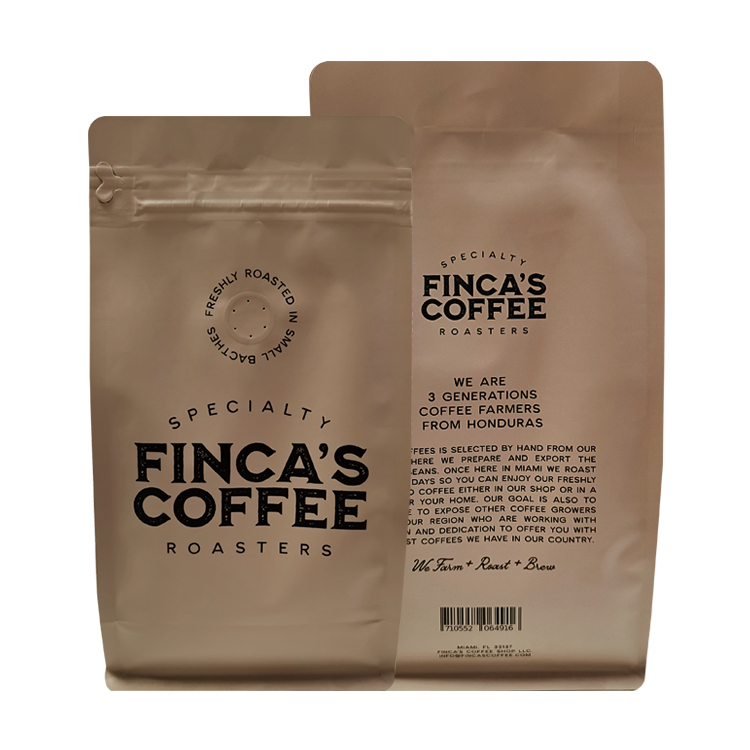
This is a practical reason to explain both the design direction and the material direction. You can prefer a warm kraft-style appearance while discussing a construction that includes white paper. The complete structure also includes films, while the pocket zipper and valve belong to the feature specification.
Use these projects to describe what you want to make: a visible paper look, a wider information panel, a particular opening or a full printed design. We can then connect those preferences to the proposed layers and samples, rather than selecting the bag from its color alone.
What changes when the lining uses PLA?
PLA is a polymer, even when bio-based
PLA stands for polylactic acid. NatureWorks, a PLA producer, explains how its plant-derived feedstocks are converted into lactic acid and polymerized into PLA. A bio-based starting material can therefore become a plastic polymer; it is not another paper layer.
When a kraft bag uses a PLA lining, keep that lining in the complete structure description. Ask about the proposed grade, other layers and attached components, just as you would for a PE-based construction. Bio-based content, plastic-free composition and composting behavior should be discussed as separate requirements.
If composting is your objective, identify the intended conditions and the exact finished configuration to review. EPA guidance distinguishes commercially compostable plastics from home composting and advises keeping compostable plastics out of conventional plastic recycling. For the broader disposal comparison, read our Recyclable vs Compostable Coffee Bags guide.
Two white kraft/PLA configurations
Our white kraft/PLA stand-up pouch measures 15 × 26 + 4 cm and uses White Kraft Paper / PLA. It combines gravure printing and a bio-based degassing valve. The specification identifies the PLA lining thickness as 150 µm; that is a lining field, not a statement of total bag thickness.
We also made our white kraft/PLA flat bottom bag for 2 lb beans in 12.5 × 37 + 8.5 cm. Its structure is White Kraft Paper / PLA (PLA+PBAT), with 140 µm film thickness, gravure printing and a PLA degassing valve. The coffee fill is 2 lb, approximately 907 g.
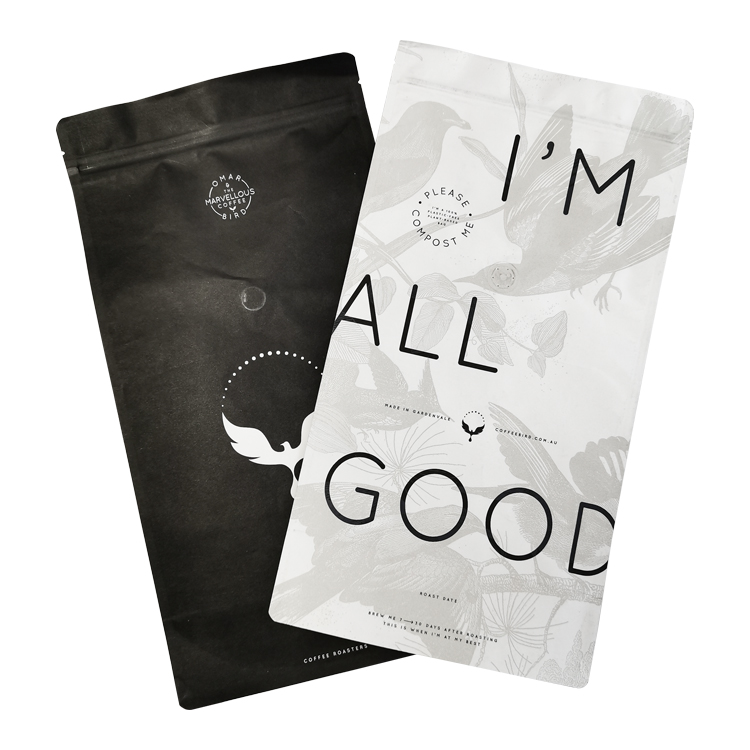
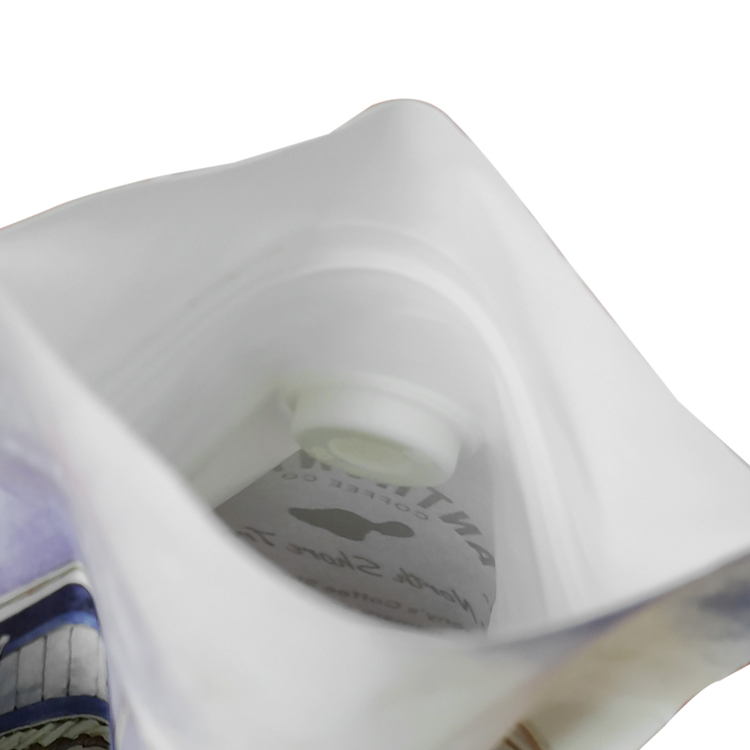
These are two different specifications. Retain the PLA+PBAT description on the flat bottom example and the specific lining-thickness label on the stand-up pouch. For your own bag, compare the actual structure, dimensions and features you need instead of treating every paper/PLA product as one identical material.
| Production example | Material structure | Stated thickness field | Selected valve |
|---|---|---|---|
| 12 oz kraft flat bottom bag | MATOPP / Kraft Paper / VMPET / PE | Film thickness: 140 µm | Degassing valve |
| White kraft/PLA stand-up pouch | White Kraft Paper / PLA | PLA lining thickness: 150 µm | Bio-based degassing valve |
| 2 lb white kraft/PLA flat bottom bag | White Kraft Paper / PLA (PLA+PBAT) | Film thickness: 140 µm | PLA degassing valve |
Use a comparison like this in your material brief. Keep the thickness field's name with its value and put the valve in a separate column. When requesting an alternative, ask us to identify the proposed structure and the scope of any thickness figure. That keeps your handling and sealing review connected to the actual construction instead of ranking different bags by one number alone.
Keep valves, zippers and other components in the brief
The finished bag includes its features as well as its walls. Identify the proposed valve, reclosure, labels and other attached items when discussing a material objective. Inks, coatings and adhesives also belong to the complete construction information.
For a paper/PLA direction, ask which valve and other components are proposed with the film. For a paper/VMPET/PE bag, retain those layers in the brief even if your design emphasizes the paper surface. A material objective should describe the package you will supply to customers, including the features they use.
Keep each component tied to a purpose. Discuss a valve with your coffee and roast-to-pack timing; choose a zipper when reclosure is part of the intended use; review the first-opening method alongside the final seal. Removing a component to meet a composition goal means reviewing the changed package for the same coffee and packing process.
The exact feature arrangement should appear on the bag drawing. Explain where filling equipment needs access and what area is reserved for the top seal. That allows material, closure and artwork choices to develop together before the design is fixed.
Choose around your actual priority
A paper appearance
If your main goal is a visible kraft surface, start by describing the appearance. Send a reference showing the color, amount of printed coverage and information hierarchy you prefer. We can compare the paper laminate and print arrangement with that direction.
Think about the whole range. One coffee might use more open paper-colored space while another has a large colored area. Decide which features make the bags look related: a common logo position, type style, panel layout or graphic. Then list the changing coffee names and quantities for each version.
Use our kraft coffee bag page to explore the formats and actual projects. The paper look can be part of a full printed design, as well as a restrained design that leaves more of the surface visible.
A specified material or disposal objective
If a composition requirement is essential, write it explicitly in the brief. “A brown paper look” and “a bag excluding plastic components” create different selection criteria. The listed paper/film and paper/PLA configurations contain polymer layers, so retain those facts when comparing them with your requirement.
For a plastic-reduction target, identify the current package and what you want to compare. Ask for the relevant material amounts on a consistent basis rather than assuming that adding paper reduces the plastic in every bag. Keep coffee protection, usable size and features in the comparison so the alternatives still describe the same job.
If the objective is a particular recycling or composting route, name that route and your sales market. Review the proposed complete bag and relevant documents with the intended collection program. The existing disposal comparison covers that broader decision; here, the first step is identifying exactly what the kraft bag contains.
Coffee protection and packing performance
Give us the coffee type, intended net weight, unopened storage target and distribution conditions you want to address. Include any established performance specification or report. Those inputs help us discuss the proposed material as a coffee package, alongside your visual and composition priorities.
Check the whole bean or ground fill in the intended format. Two bags can look similarly tall but offer different usable space because their widths, folds and openings differ. Keep the original dimension notation when sending an existing reference, then agree the drawing for your own order.
Discuss the sealing equipment and process as well. The word kraft does not set a sealing temperature, pressure or dwell time. Use a suitable sample of the actual proposed construction and keep the result with the agreed specification.
| Your priority | Start with | Next step |
|---|---|---|
| Visible paper appearance | Color and artwork coverage reference | Compare the actual laminate and printed surface |
| A specific composition requirement | Written definition and complete component request | Review which proposed configurations meet that requirement |
| Reducing plastic content | Current construction and a consistent comparison basis | Compare material amounts with the coffee requirements retained |
| A disposal route | Target market, program and complete bag | Review applicable documentation and local acceptance |
| Filling and coffee protection | Coffee, weight, process and storage needs | Review a suitable material and physical sample |
When you have more than one priority, put them in order. Tell us which requirement is essential and where you are open to alternatives. A paper color is easier to discuss as a design choice when it is separated from a strict composition or performance requirement.
Review printing, filling and samples
Visible paper and printed coverage
Choose how much of the paper appearance you want to retain. A small black design, large color fields and a full illustration use the surface differently. Explain whether the material should remain visually prominent or serve as the base for the printed artwork.
Compare important colors on the proposed material and finish. A screen is useful for checking the layout and wording, while a physical reference helps you review the finished appearance. If white printing, an opaque area or a special effect matters, identify it before approving the artwork.
The warm brown matte flat bottom example uses white kraft in its specified structure. This is a useful design reference when the desired look and the underlying paper component differ. Describe both in your inquiry instead of asking the print team to infer the laminate from a color photograph.
For several coffees, provide the quantity per design. We can discuss digital or gravure printing around the actual range and selected material. A paper component alone does not select the process or the minimum quantity for every project.
The real opening and sealing process
Try the coffee weight you actually plan to sell. Check filling access, the height of the coffee, the valve and closure area, and the space needed for the final seal. For a resealable bag, review first opening and later reclosure as separate steps.
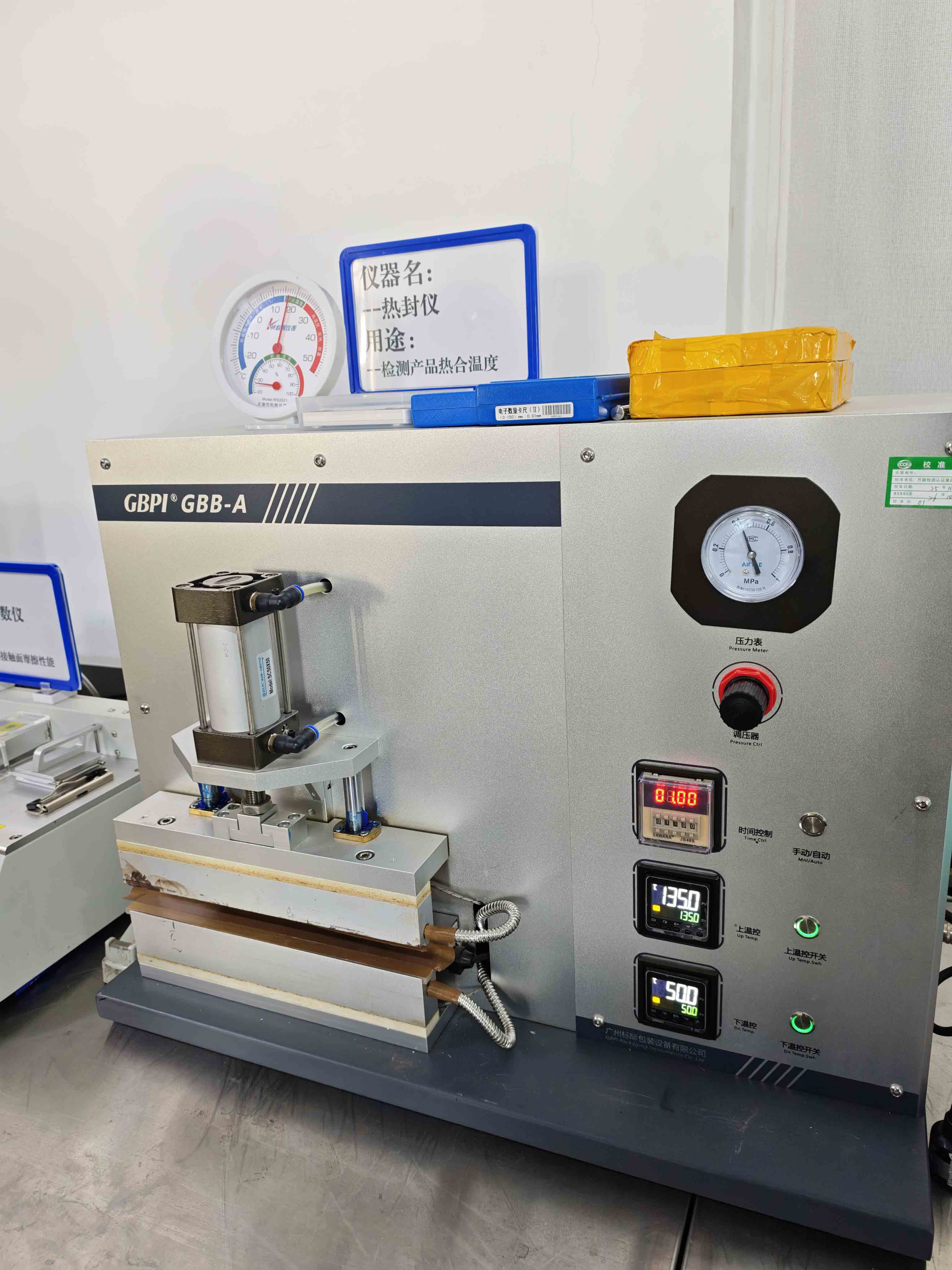
Record the sample identity and the construction it represents. A similar-material sample may help you compare feel or finish but use another size or feature arrangement. Agree which questions it can answer before treating it as a reference for your final order.
Samples of similar materials are free. Custom sample fees are refunded when you place an order, and sample shipping is quoted by destination. Tell us whether you want to review the paper appearance, a specific printed design, the filled size or an opening feature so we can arrange the relevant sample scope.
Our sample-testing guide provides a practical record for filling, sealing and handling. Keep the approved material and drawing with that record so the selected kraft configuration can be identified clearly on later orders.
Describe the bag accurately on your artwork
Write material and environmental wording around the agreed construction. A description of a kraft-paper component should remain a description of that component, without turning into a claim that the entire bag is paper-only or plastic-free when polymer layers are intentionally present.
FTC's Green Guides emphasize substantiated environmental statements and clear qualifications. Bring the exact wording you want to print into the material discussion before the artwork is approved. Keep any proposed disposal statement tied to the finished configuration and relevant conditions.
An appearance-led design can stay attractive without an unsupported material claim. Let the paper look, coffee information and graphics carry the design. If a specific material statement is appropriate, give it a clear place and retain the meaning of the approved text when the layout changes.
For a material change on a repeat order, review that wording again. Retaining the same artwork while substituting a lining or accessory can leave an old description on a new bag. Identify the revised structure and update the applicable words before approving the production files.
Prepare your kraft coffee bag enquiry
Send the coffee type, intended net weight and preferred bag format. Include the dimensions of a current bag if you have them, a paper appearance reference, estimated quantities per design and the delivery country.
Explain your material goal in its own sentence. Say whether you want a paper look, a specified construction, a plastic-reduction comparison or a particular disposal route. Include the valve, zipper and opening preferences, plus any known filling or sealing requirements.
You can start without finished artwork. Our free packaging design service includes unlimited revisions and free layered production files after design approval. We can help arrange your brand and coffee information around the chosen panels, seals and features.
Before ordering, bring the specification, artwork, sample reference and quotation together. The confirmed structure should match the material wording, and the size and features should match the physical bag you reviewed. This keeps your visual brief and packaging requirements attached to one identifiable configuration.
Frequently asked questions
Can I add a window to a kraft coffee bag?
Describe where you want the window and what it should show. We can discuss the transparent area with the proposed material, protection requirements and panel layout. Confirm the construction for that particular bag before approving the drawing or material wording.
Can I use a label for changing batch information?
Include the label location and information in the design brief. Check the proposed label or marking method on the selected surface and finish, then review its readability and handling. Keep any added label in the complete component discussion when a material or disposal objective matters.
Should the shipping carton and coffee bag use the same recycling statement?
Treat them as separate packages with their own materials and disposal instructions. A paper carton does not determine the route for a laminated coffee bag inside it. Keep the wording clearly attached to the item it describes and review each proposed instruction for the intended market.
Further Reading
Discuss your kraft coffee bag configuration
Tell us the paper appearance, coffee weight and quantities you want, together with your material goal and destination. We can explain the proposed layers, compare features and samples, and develop your artwork free of charge around the selected bag. Discuss your kraft coffee bags.