
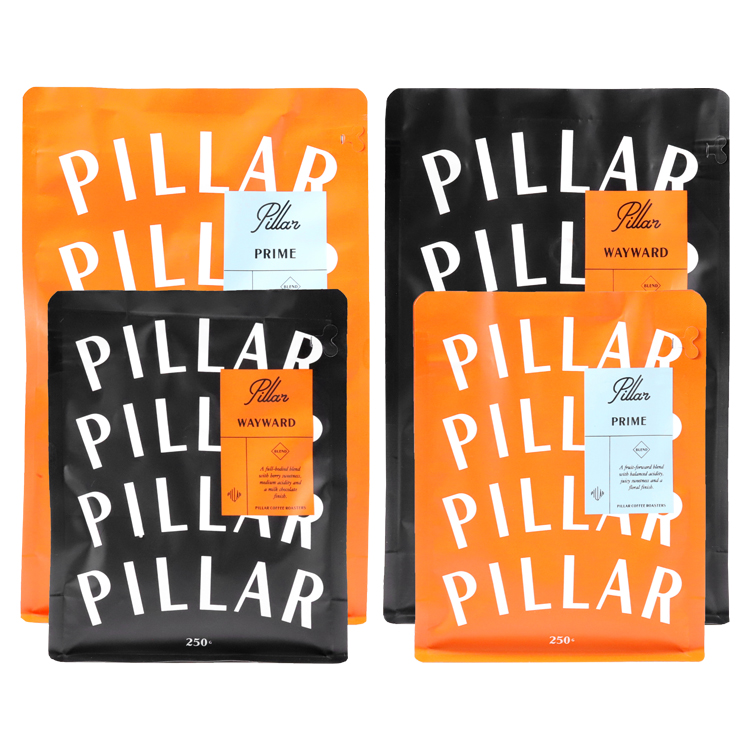
For your next order, start with the full material structure rather than a description such as “silver inside,” “matte” or “kraft.” Those words describe only part of the choice. We make coffee bags in several constructions, and the examples below show how to turn their material codes into useful questions about your own packaging.
Read the material code from the outside toward the coffee
Start with the sequence, then add the specification
A laminate description often lists the main materials from the outside toward the product-contact surface. Ask the supplier to confirm that order on the specification. For PET / AL / PE, this describes a polyester film, an aluminum foil layer and a polyethylene layer. It is a useful outline of the construction, but you still need the grades, thicknesses and other details for your particular order.
Think of the code as the beginning of a conversation. It does not usually list every ink, adhesive, coating or additive. It also does not explain the bag dimensions, which surface is printed, how the opening is arranged or which components will be attached. Keep the material description and the finished-bag drawing together when you compare quotations.
A practical guide to the abbreviations
| Term on the specification | What it identifies | What to ask about your bag |
|---|---|---|
| PET | Polyethylene terephthalate, a polyester film | Film grade, position, printing and any coating or treatment |
| AL | Aluminum foil | Foil thickness and the complete laminate surrounding it |
| VMPET | Vacuum-metallized PET film | The PET film and its deposited metal layer, with the relevant specification |
| PE | Polyethylene | The selected grade and its role in the construction |
| MDOPE | Machine-direction-oriented polyethylene film | The oriented film and the other layers used with it |
| MOPP / VMOPP / CPP | The PP-family sequence used in our 12 oz example | Individual film grades, metallization and sealing requirements |
| Kraft Paper / White Kraft Paper | A paper component | The films or lining combined with the paper |
| PLA | Polylactic acid polymer | The exact lining or film, including any stated blend |
CPP means cast polypropylene, while VMOPP identifies a metallized oriented polypropylene film. Keep the supplier's complete film designations when comparing quotations: short codes can leave the finish, coating and grade unspecified. In our examples, PET / VMPET / PE and MOPP / VMOPP / CPP describe different material families, even though both include a metallized film.
Work through one structure before comparing alternatives
Take PET / VMPET / PE as a starting example. First, keep all three terms in the inquiry. Next, ask for the film grades and thickness breakdown, then add the bag dimensions, print process and required features. Finally, connect that proposed specification to a sample reference. You now have a candidate that can be compared with another proposal using the same fields.
If the second quotation says only “matte coffee bag, 140 microns,” ask for the missing construction details before treating it as an equivalent offer. Matte describes a surface, and 140 µm describes a thickness; neither identifies the complete material sequence. The comparison becomes useful when each supplier is responding to the same coffee, bag and packing requirements.
You can also separate the choices you have made from those you want help deciding. For example: “We want a matte flat bottom bag with a valve and side zipper. Please compare a foil-containing option with a metallized-film option for our filling setup.” That request gives the team a clear design direction while leaving room to discuss the materials on their own terms.
Keep weight and thickness in separate fields
Coffee net weight describes the product you want to pack. Film thickness describes the packaging material. Our 250 g flat bottom example uses 140 µm film, while the 1 kg side gusset example below uses 120 µm. These are two different specifications, not a rule that larger coffee weights require thinner or thicker bags.
Be equally precise about which thickness is being described. A total laminate thickness and a PLA lining thickness are different measurements. When requesting an alternative material, retain the field name as well as the number so both quotations address the same part of the construction.
Understand the jobs the layers perform
Printing, appearance and physical support
The outside of a coffee bag carries the graphics and contributes to its handling and surface feel. Matte and glossy describe appearance; they are not complete material names. A printed film and a printed paper-containing structure may produce a similar color palette while differing in the layers beneath the design.
Bring a physical reference when a particular feel, opacity or printed effect matters. Show which aspect you want to keep: the matte surface, the visible paper texture or the contrast between colors. We can then discuss that preference alongside the bag construction instead of treating a photograph as the whole material brief.
Barrier and sealing functions
A barrier component helps limit transmission through the material. A sealable inner surface allows the specified areas to be joined during bag making and final packing. These functions work together, but a material's barrier description does not supply the settings for your sealing machine.
The proposed structure must also suit the format. A flat bottom bag, a stand-up pouch and a side gusset bag create different panel and fold arrangements. Review the laminate with the actual bag drawing and filling opening. A material used successfully in one configuration is a useful starting reference, rather than a complete instruction for another.
Bonding the materials into a usable construction
Where separate materials are laminated, the bonding system is another part of the specification. Discuss the combined construction rather than ordering the outer film, barrier and lining as if their names alone define a finished bag. The relevant questions include how the layers are combined and which physical sample represents the proposed order.
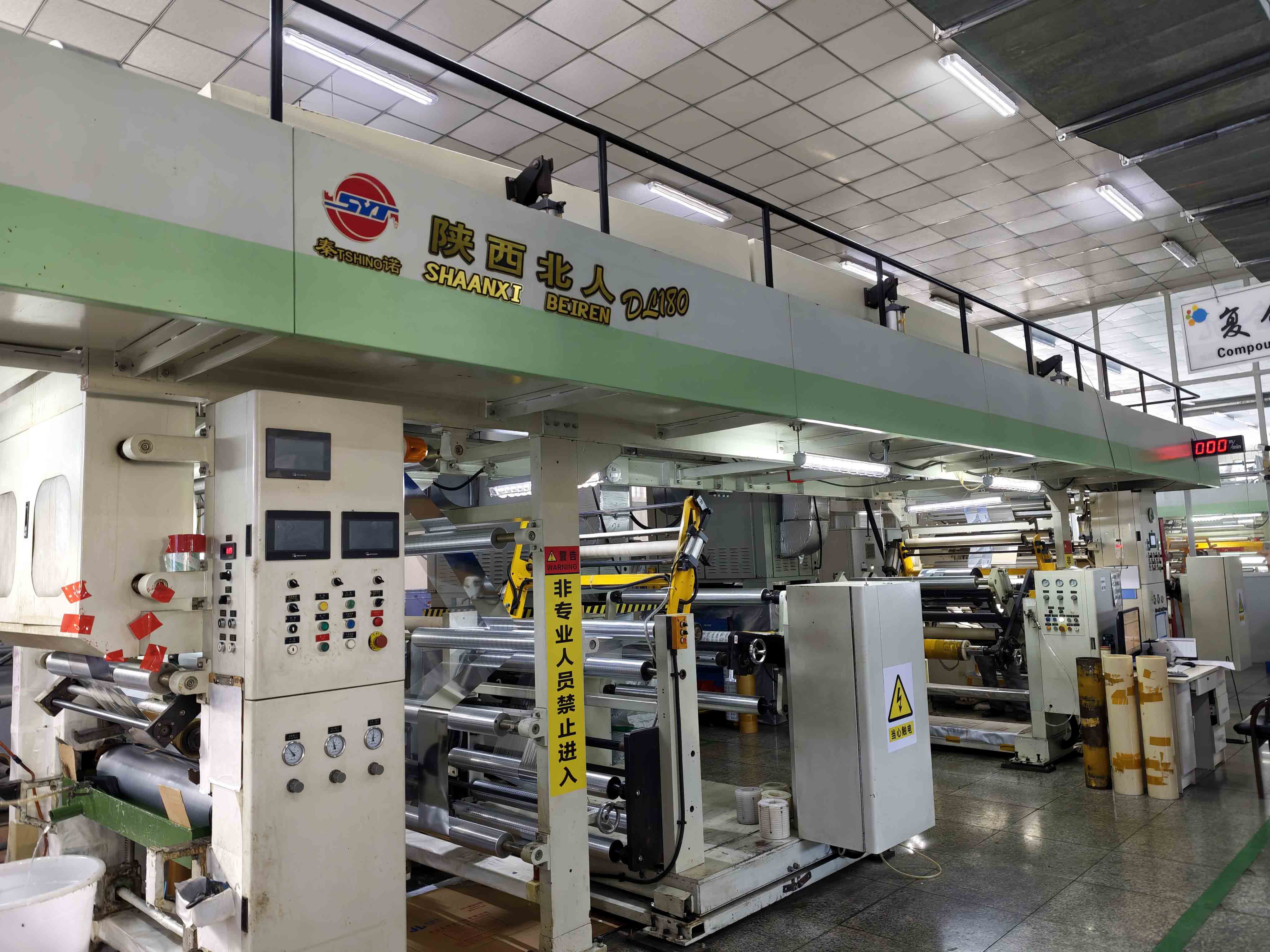
Our materials and barrier structures page introduces the directions we can discuss for custom bags. Use this article to read the material description, then bring the specific appearance, packing and protection requirements you want to compare.
Distinguish aluminum foil from metallized film
PET / AL / PE contains a foil layer
AL identifies aluminum foil, a thin metal sheet used within the laminate. In PET / AL / PE, the foil is one of the specified components alongside polyester and polyethylene. The European Aluminium Foil Association describes foil production and its use in packaging laminates; the foil component should remain distinct from the films bonded to it.
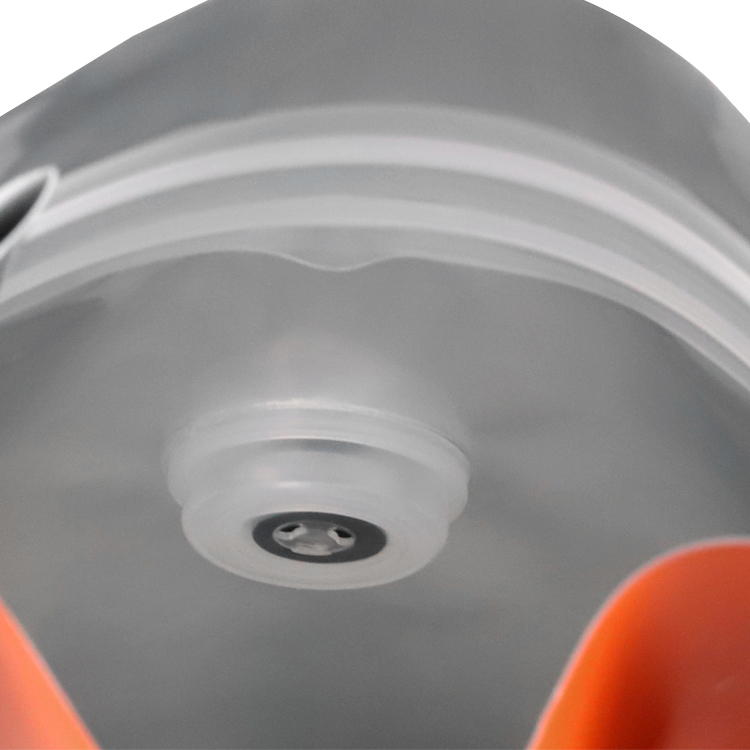
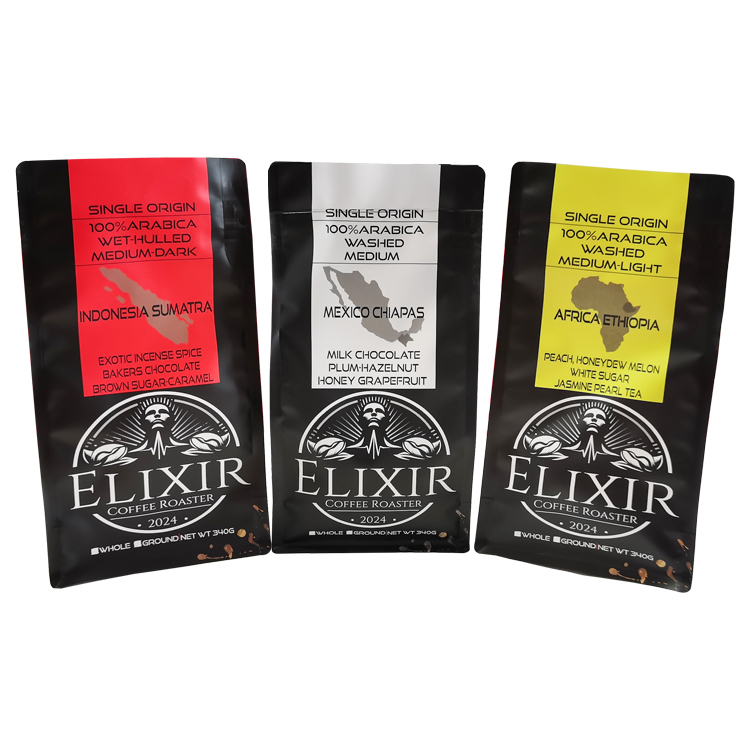
We made our black and orange flat bottom coffee bag using PET / AL / PE, with 140 µm film thickness and gravure printing. The specified dimensions are 14 × 18.5 + 7.5 cm, with a degassing valve, side zipper and matte varnish. It is a foil-containing example even though the outer appearance is matte and printed.
PET / VMPET / PE contains metallized polyester
VMPET is PET film with a deposited metal layer. That is a different construction from a separate sheet of foil. Film producers such as Toray describe depositing barrier layers onto film substrates; the substrate remains part of the material. Do not shorten a VMPET specification to “foil” when asking for a repeat order or an alternative quotation.
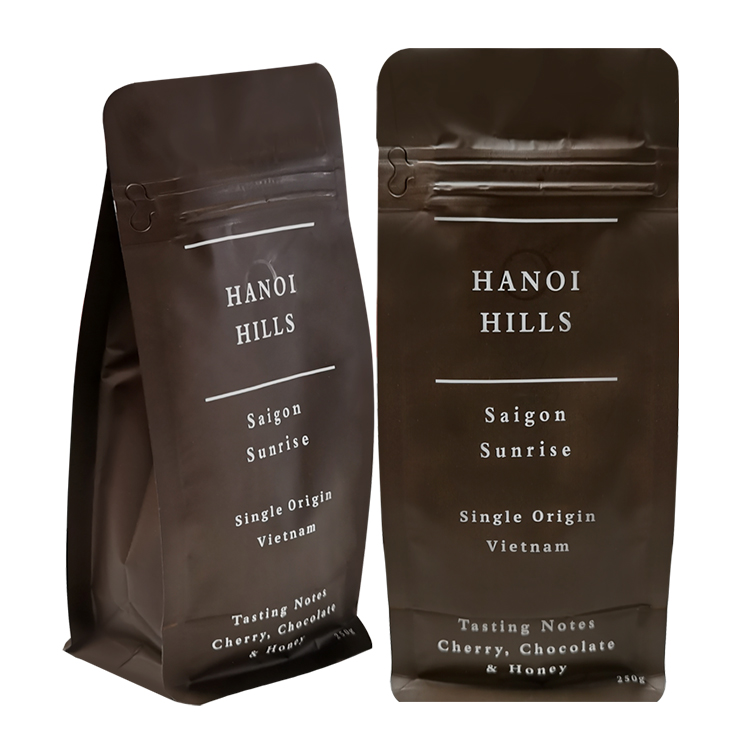
Our 250 g digitally printed flat bottom bag uses PET / VMPET / PE at 140 µm. We made it in 9.5 × 22 + 7 cm, with a valve and side zipper. This gives you a metallized-film example to compare with the foil-containing project above, without assuming that their matching total thickness means matching performance.
Compare the proposed constructions on the same basis
Ask for the specific laminate information relevant to your project. Avoid choosing between foil and metallized film from an inside color or a general “high barrier” label. Include the intended storage and distribution conditions, the bag configuration and any acceptance requirements your packing partner already uses.
If a supplier proposes changing AL to VMPET, ask for a revised structure and explain what must remain suitable: coffee protection, appearance, handling, sealing and the intended disposal route. Treat it as a material change to review, even when the new bag looks very similar.
Read PE-based and PP-based structures as complete proposals
MDOPE / PE: related polymers, different film roles
MDOPE identifies machine-direction-oriented polyethylene. The orientation is a film-processing description within the PE family, not an additional material called aluminum or paper. Dow's information on oriented polyethylene films provides a useful introduction to this terminology. It does not establish the resin brand or grade used in a particular coffee bag.
We made our 1 kg MDOPE/PE side gusset coffee bag in 14 × 40 + 7.5 cm, using gravure printing and 120 µm film. It includes a PE degassing valve. The film construction and the valve description are separate entries, which helps you ask a more complete question about a PE-based package.
MOPP / VMOPP / CPP: several films within a PP-family structure
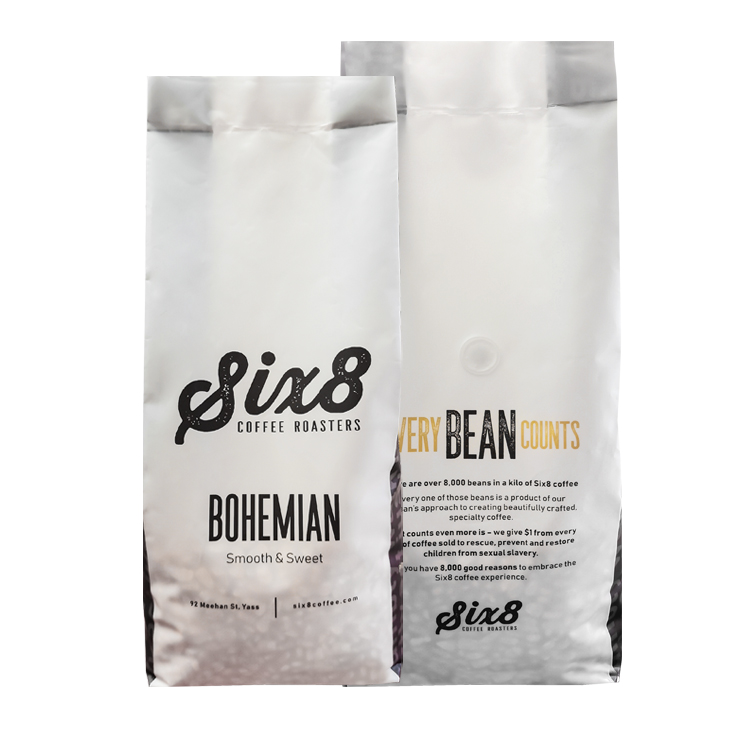
Our 12 oz PP-family flat bottom coffee bag uses MOPP / VMOPP / CPP at 140 µm. It measures 12.5 × 24 + 7.5 cm and combines digital printing, a degassing valve and a zipper. The coffee fill is 12 oz, approximately 340 g; it is a separate product size from the 250 g example.
This example also shows why “mono-material” does not necessarily mean a single physical layer. A family-based construction can combine different films, treatments and functions. Jindal's film information includes metallized OPP and cast polypropylene grades, illustrating the variety within PP-based packaging materials. Your order still needs its own grade and component details.
Decide what you want the change to achieve
When exploring PE- or PP-based options, identify the reason for considering them. You may want a particular material family, a different feel or a construction to assess with a collection program. State that objective together with the coffee protection and packing requirements, so one preference does not silently replace the rest of the brief.
A material-family description alone does not give customers disposal instructions. Review the films, coatings, inks, bonding system and attached components together. The relevant collection program must accept the finished configuration; a familiar polymer abbreviation is not a universal collection guarantee.
Keep a material comparison separate from a format comparison
Suppose you like the shape of our 1 kg side gusset bag but want to explore another laminate. Start with that bag's dimensions and intended fill as a reference, then ask which material candidates to sample in that format. If the alternative sample is also a different width, height and opening arrangement, you will be comparing several changes at once.
The same approach helps when a brand wants its retail and wholesale coffees to share an appearance. Decide which visual elements should carry across the range, then specify each bag's fill, format and features. The larger bag does not have to inherit a material solely because the smaller one uses it. Conversely, a shared material direction does not require identical dimensions or printed panels.
Keep the proposed change visible in the request: material only, format only, or a coordinated review of both. This helps us arrange samples that answer the actual question. It also gives your packing partner a clearer way to explain whether a difference comes from the film feel, the bag geometry or the working space at the opening.
Paper and PLA describe components, not the whole answer
Keep the films behind the paper in the description
Kraft paper can be one part of a coffee bag containing other materials. For example, our kraft constructions include MATOPP / Kraft Paper / VMPET / PE. This code retains the paper component alongside the films, rather than describing the package simply as a paper bag.
If your priority is a visible paper appearance, discuss that alongside the printing coverage and desired finish. If your priority concerns material composition, ask for the complete structure. Those are different requests and can lead to different sample comparisons. Our guide to kraft bags and plastic-free claims examines the paper-specific question in more detail.
A white kraft/PLA example
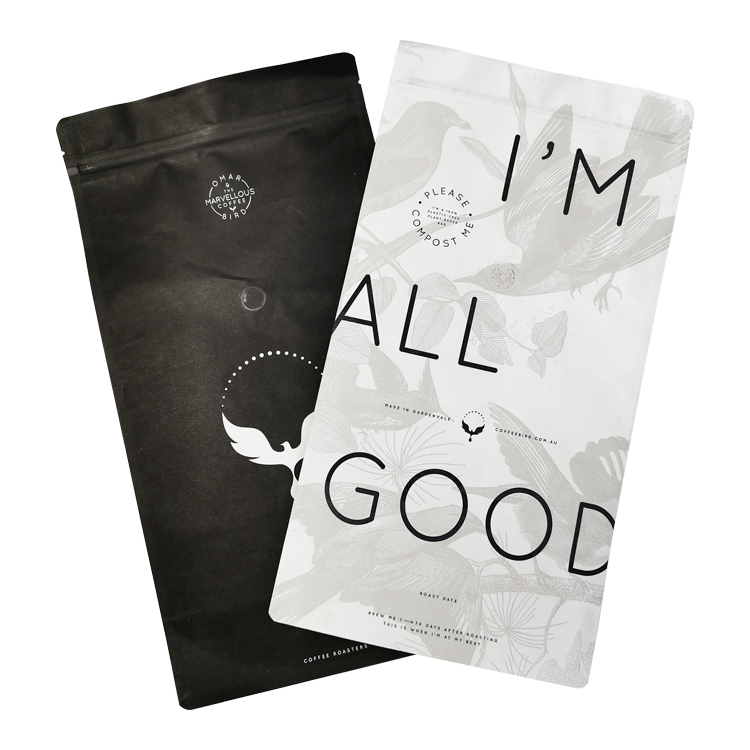
Our white kraft/PLA stand-up pouch uses White Kraft Paper / PLA, measures 15 × 26 + 4 cm and combines gravure printing with a bio-based degassing valve. Its specification identifies a PLA lining thickness of 150 µm. Keep that lining measurement distinct from the total film thicknesses quoted for the other examples.
PLA is polylactic acid, a plastic polymer. NatureWorks explains the conversion of plant-derived sugars into the building blocks used to make PLA. A plant-based starting material therefore does not mean that a finished lining is paper or that the bag is plastic-free.
For disposal, keep material identity separate from the required conditions. EPA guidance distinguishes commercial composting from home composting and advises against putting compostable plastics into conventional plastic recycling. Our recyclable versus compostable coffee bag guide covers the broader comparison; here, the first task is to identify the actual layers and components.
Include the parts attached to the bag
Valves and closures need their own descriptions
Write the valve and closure into the brief alongside the laminate. “PE-based film with a PE valve” is more informative than “PE bag with valve,” while the zipper, labels and other components still need consideration. Ask which configuration a proposed sample and its supporting documents represent.
Choose the opening around the way the bag will be filled and used. The original seal and the consumer's reclosure have different roles. A zipper does not turn the material specification into a final sealing instruction, and changing the closure can change how much working space the packing operator needs.
Treat a window as part of the construction
If you want customers to see the coffee, mark the proposed window on the design brief. Discuss the transparent material, placement and protection requirements together. A window is not simply an artwork area to remove after the laminate has been selected; it must work with the complete bag proposal.
Toray's packaging-film information includes transparent deposited barrier films as well as metal-deposited types. This illustrates why clarity and barrier construction are separate questions. It is not a statement that every transparent film is suitable for your coffee or that one particular coating is included in our examples.
Turn the material description into a purchasing record
Compare the same fields in each quotation
Keep one short record for each candidate, rather than a folder of photographs with similar filenames. Give the sample an identifiable reference and attach its specification. If a proposed alternative changes the layers, thickness, accessories or finish, record the change on that candidate's sheet.
| Record field | What to write | What it helps you compare |
|---|---|---|
| Coffee and filling | Beans or ground coffee, target net weight, packing arrangement | Whether the sample represents your use |
| Material | Full sequence, grades and relevant coatings or bonding details | Which construction is actually being quoted |
| Thickness | Each agreed thickness and whether it is total or layer-specific | Whether the figures describe the same thing |
| Bag and features | Format, dimensions, valve, zipper and window | The complete package rather than film alone |
| Appearance | Print process, finish and physical reference | How the approved artwork should look and feel |
| Protection information | Report reference, method, specimen, conditions and units | Whether supporting results are comparable |
| Intended destination | Sales market and proposed disposal route | Which component and collection questions to resolve |
Compare oxygen and moisture reports
OTR describes oxygen transmission, while WVTR describes water-vapor transmission under the stated test conditions. ASTM D3985 addresses oxygen transmission through film materials, and ASTM F1249 addresses water-vapor transmission through flexible barrier materials. Their public descriptions help identify the question each method addresses; the method name is not a result for your bag.
Before comparing two figures, check the specimen identity, full units, temperature, humidity and other stated conditions. Also distinguish a flat-film specimen from a converted package. The bag's seals and attached parts are additional considerations when deciding what evaluation your project needs.
Keep the intended coffee storage period as a project requirement to assess with the package and packing process. A material code or a single transmission result should not become an automatic shelf-life claim. Bring any existing acceptance criteria into the conversation so the proposed material can be reviewed against the same objective.
Connect material selection with a physical sample
Use the sample for the decisions it can answer
Compare the candidate's feel, appearance, shape, opening access and behavior with your intended coffee fill. Review the material specification beside the sample so observations stay connected to the right construction. If you ask for a different laminate after approving the artwork, revisit the physical appearance and packing checks affected by that change.
For the wider approval sequence, use our coffee bag sample-testing guide. If the material change affects final closure after filling, our heat-sealing guide explains equipment matching, controlled trials and inspection. Keep the operating setup specific to the actual material and machine.
Choose a useful first sample comparison
For an initial material review, ask which similar-material samples can demonstrate the candidate directions. Use them to discuss the surface, feel and construction, and note how each differs from the proposed custom bag. A stock-size reference can help you handle the material without becoming the final drawing for your order.
When fit and packing access become the main questions, move the comparison to a sample representing your intended dimensions and opening. Try your own coffee form and net weight. Keep the bag upright as you normally fill it, then follow the intended final closure route. Record whether the candidate gives the operator a practical way to handle and present the opening.
For artwork approval, identify which physical appearance needs a printed reference. A screen layout can show where the logo goes, while a material or printed sample helps you discuss the surface underneath it. Tell us which decision you are trying to make so the sample stage serves that decision, rather than requesting several different samples without a clear comparison.
Carry the chosen specification into the order
Once you select a candidate, retain its material description, drawing, sample reference and artwork revision together. Identify which coffee designs share that specification and which need a separate review. This makes a later repeat order or material change easier to discuss without relying on memory or the color of the finished bag.
We offer free samples of similar materials; custom sample fees are refunded when an order is placed. Sample shipping is quoted for the destination. Tell us whether you need a material comparison, a fit sample or a printed custom sample so we can discuss the appropriate next step.
Frequently asked questions
Can different coffee designs share one material specification?
Yes, when the selected construction and other relevant requirements are the same. List the designs covered by that specification and flag changes in fill, dimensions, features or distribution needs. A different graphic alone is not a material code, but the complete design range still needs clear production references.
Should a repeat order use the same sample reference?
Include the previous order and approved specification, then state whether anything should change. If a replacement grade or construction is proposed, review it as an identifiable revision. Keep the accepted sample and documents associated with the new order rather than relying only on a familiar product name.
What should I send if I only have an empty coffee bag?
Send clear photographs of the front, back, opening and any printed material information, plus the sample when practical. Explain what you want to retain or change and the coffee you plan to pack. We can help organize the material questions and a suitable sample comparison from that starting point.
Further Reading
- Toray: packaging films and deposited barrier layers
- European Aluminium Foil Association: foil facts and production
- Dow: polyethylene resins for oriented films
- Jindal Poly Films: flexible-packaging film grades
- NatureWorks: how PLA is made
- ASTM D3985: oxygen transmission through film materials
- ASTM F1249: water-vapor transmission through barrier materials
- US EPA: plastic recycling and composting questions
Discuss the materials for your coffee bags
Send your current bag or material code, coffee form and net weight, preferred format, valve and opening requirements, quantities per design and delivery country. Include any appearance reference, material objective or packing requirement that matters to the decision. You can start without finished artwork. We offer free design with unlimited revisions and free layered production files after design approval. Tell us about your coffee bag project, and we can help connect the material choice with the size, design and samples you need.