
“What does a 12 oz coffee bag cost?” is a useful opening question, but it does not yet describe one product. A 12 oz bag can use different shapes, dimensions, laminates, openings and artwork. An order for one unchanged design also differs from an order split among several printed versions.
We prepare a quotation around the bags you want to receive. This guide explains which choices belong in that brief, how to compare alternatives and where samples help you avoid selecting a low-priced configuration that does not fit your coffee or packing process.
Define what the quotation covers
Bag price, preparation and delivery
Separate the recurring bag-production cost from any preparation or delivery items. The unit price may include some items and show others separately, so ask what it covers before comparing two figures. A clear quote identifies the bags, quantities and production details being priced.
Ask about print preparation, including gravure cylinders where applicable, custom sample fees, sample shipping and delivery of the finished order. Identify whether a cost applies once, to each artwork version or to the particular order. Do not assume that another supplier's pricing arrangement applies to your project.
Our packaging design is free, with unlimited revisions. After design approval, we provide layered production files free of charge. Similar-material samples are free; custom sample fees are refunded when you place an order. Sample shipping is quoted by destination. Those service terms should stay distinct from bag production, physical print preparation and delivery.
| Quote item | What to identify | Comparison question |
|---|---|---|
| Finished bags | Specification and quantity of each design | Are both quotes pricing the same bag? |
| Print preparation | Applicable cylinder or other preparation items | Included in the unit price or separately listed? |
| Samples | Similar-material or custom; agreed scope | Which question will the sample answer? |
| Delivery | Destination, transport arrangement and included charges | Are both totals based on the same delivery scope? |
| Future orders | Same specification and artwork, or planned changes | Which preparation items apply again? |
A written specification for every option
Label each proposed option with its dimensions, complete structure, thickness where specified, finish and accessories. Add the artwork versions, quantity per version and receiving destination. This makes the options identifiable after several rounds of discussion.
A photograph is helpful for explaining appearance. A written specification identifies the layers and features that a photograph cannot list. If a material, zipper or size changes, ask for the option to be revised explicitly so you can connect the new price to the new configuration.
You can contact us before all these decisions are final. State your coffee weight and the details you know, then ask us to propose suitable options. Our custom coffee bag process explains how the specification, design, samples and quotation come together.
Dimensions and bag construction
Net weight is the starting point
Dimensions affect the material and construction required for the bag. Coffee net weight helps establish the size to investigate, but there is no one dimension for every coffee sold at that weight. Include whether you pack whole beans or ground coffee and explain the intended filling and sealing method.
Leave usable space for filling access, the closure where present and the final heat seal. Reducing a dimension without a trial fill can move the coffee too close to the seal or make the opening inconvenient to use. A slightly different panel arrangement may also change the filled appearance or carton fit.
Keep net-weight units accurate. Twelve ounces is approximately 340 g, while 250 g is a separate pack size. Ask for the bag around the weight you actually sell. Film thickness is another field: a 140 µm material specification describes the laminate, not coffee capacity.
Format also matters. Flat bottom, stand-up and side gusset construction use their panels and folds differently. Start with the function and shape you need, then use our bag-format comparison and sizes page to prepare candidate specifications.
Two different 250 g flat bottom configurations
We made a digitally printed matte flat bottom bag for 250 g in 9.5 × 22 + 7 cm. It uses PET / VMPET / PE at 140 µm, digital printing, a degassing valve and a side zipper. The design has a narrow dark brown front with centered white lettering.
Our matte white flat bottom bag for 250 g measures 14 × 18.5 + 7.5 cm. We used MATOPP / VMPET / PE at 140 µm, gravure printing, a degassing valve and a pocket zipper. Its wider white front and contrasting dark side give a different physical and visual configuration.
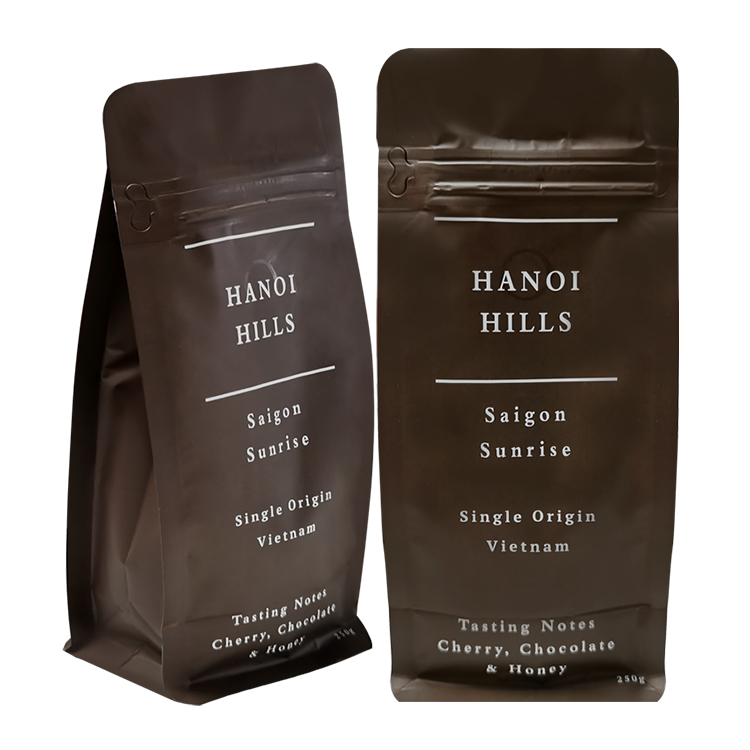
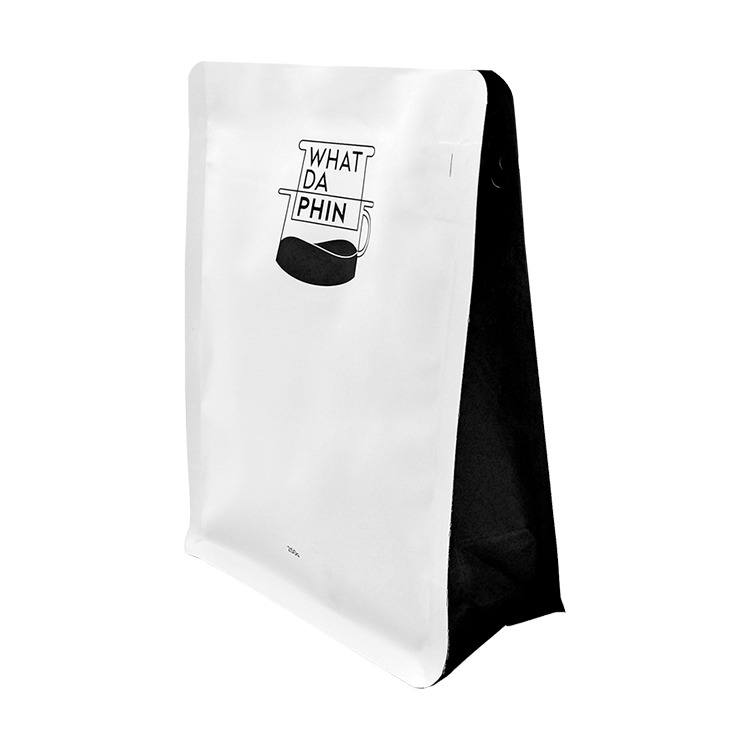
Images show separate projects and are not photographed to a common scale.
| Specification | Narrow matte 250 g bag | Matte white 250 g bag |
|---|---|---|
| Dimensions | 9.5 × 22 + 7 cm | 14 × 18.5 + 7.5 cm |
| Material | PET / VMPET / PE | MATOPP / VMPET / PE |
| Film thickness | 140 µm | 140 µm |
| Printing | Digital | Gravure |
| Features | Valve and side zipper | Valve and pocket zipper |
Both are 250 g production examples, but they describe different products. The shared fill weight and thickness do not make their costs interchangeable. To compare prices for your own coffee, retain one agreed specification and ask for identified changes from that starting point.
Material structure and film thickness
Compare complete laminates
Write every agreed layer in the quotation. “Matte coffee bag” or “kraft coffee bag” describes an appearance but does not give the complete structure. Film, paper, metallized layers and sealant materials can be combined in different ways, and each proposed combination needs its own review.
VMPET means metallized PET, not AL aluminum foil. PE-family and PP-family structures are also different specifications from a laminate combining PET, VMPET and PE. If you are comparing a material direction, ask for the layers and components of each actual option.
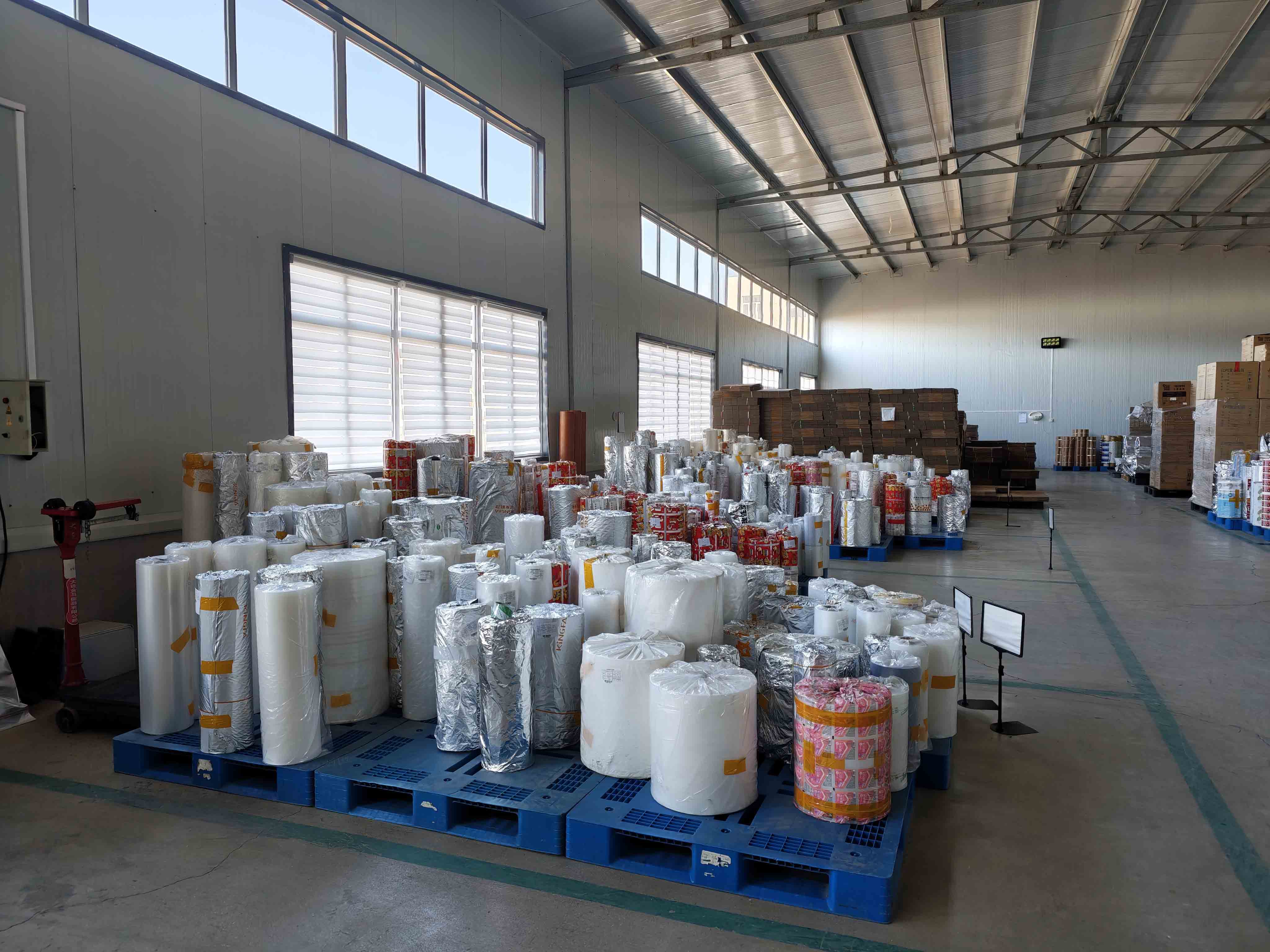
Tell us the coffee, storage and distribution conditions and any barrier requirements you have established. That lets us discuss a material for its job in the package. A thinner or differently layered option should be evaluated against those needs before treating it as an equivalent substitute.
The materials and barrier structures page explains the roles of the layers. If you have a performance target, send the test method and conditions along with the value. Neither bag appearance nor a generic layer name provides a measured shelf-life result for your coffee.
Thickness and sealing requirements
Specify thickness independently of capacity. For reference, 120 µm equals 0.12 mm; 140 µm equals 0.14 mm. Keep the stated field accurate, especially if a proposed construction separately identifies a lining thickness.
Thickness is one part of the material choice. The complete construction and sealing surface also matter when the bag reaches your equipment. Ask what an alternative material changes, then review it using the intended sealing process.
ASTM F2029 describes laboratory preparation of heat seals and notes that construction and thickness can affect sealability. Its scope also distinguishes laboratory preparation from validation on production equipment. Use suitable sample checks for your packing setup when reviewing a material change.
Do not reduce thickness simply because two bags share a coffee weight. Identify the handling, sealing and protection requirements first, and ask for an alternative that can be evaluated against them. A quoted saving is useful only if the revised bag still meets the agreed job.
Printing, designs and quantities
Quantity per design
Give both the total order and the quantity of every printed version. Several coffees can share a size and material while carrying different graphics or information. The quote needs to connect each artwork file with its quantity, rather than treating the combined total as one unchanged design.
Distinguish physical and printed differences. A larger wholesale bag may need another material and construction, while a second retail blend may use the same bag with a different coffee name. Identifying those groups lets us consider the production arrangement clearly.
Digital and gravure printing have different preparation requirements. Digital printing does not use engraved gravure cylinders; gravure preparation is reviewed against the artwork and color separations. Ask us to compare the routes for your actual quantities and expected changes instead of choosing from a universal order-size rule.
Also identify important print effects. A colored illustration, a metallic-looking background and foil stamping are different requests. Describe the appearance you want and ask which combination of printing, material and finish is being quoted. An attractive photograph alone does not specify the production method behind it.
First orders, changes and reorders
Ask which preparation costs apply to the first order and which may apply again. For gravure, discuss cylinder availability and suitability for an unchanged repeat. If a coffee name, information panel or weight changes, send that revision for a fresh review of the file and relevant preparation.
Reorder prices should still refer to a current quantity and specification. An earlier order may have used another volume, shipping arrangement or artwork version. Name the previous approved bag and list the changes instead of assuming every detail stays the same.
Quantity can influence the quote, but ordering more bags also means paying for and storing more packaging. Consider how stable the design is and how you expect to use the bags. Ask for quotations at quantities relevant to your business so you can compare the total commitment, not simply the lowest displayed unit price.
Valves, closures and finishes
Features that solve a packing or use problem
A degassing valve, zipper, opening arrangement and finish belong in the written specification. Ask whether each selected item is included in the quoted bag and which version is proposed. A bag described only as “with zipper” leaves open the position and first-opening arrangement.
Choose features by their purpose. A zipper serves reclosure after first opening; it does not replace the original heat seal. A valve is considered with the coffee and packing schedule. The filling opening and usable seal area should work with the way you pack the product.
If you want to remove a feature to review the price, identify the resulting bag as a new option. Then check the effect on filling, opening and use. Reducing a cost item is a decision to evaluate, not a reason to assume that the package performs the same job afterward.
Matte, gloss, soft-touch and decorative effects should also be stated clearly. Keep a physical reference for the appearance that matters to you. Ask whether the proposed effect changes the print or material arrangement, and choose samples that represent that option.
A 400 g format and a 1 kg configuration
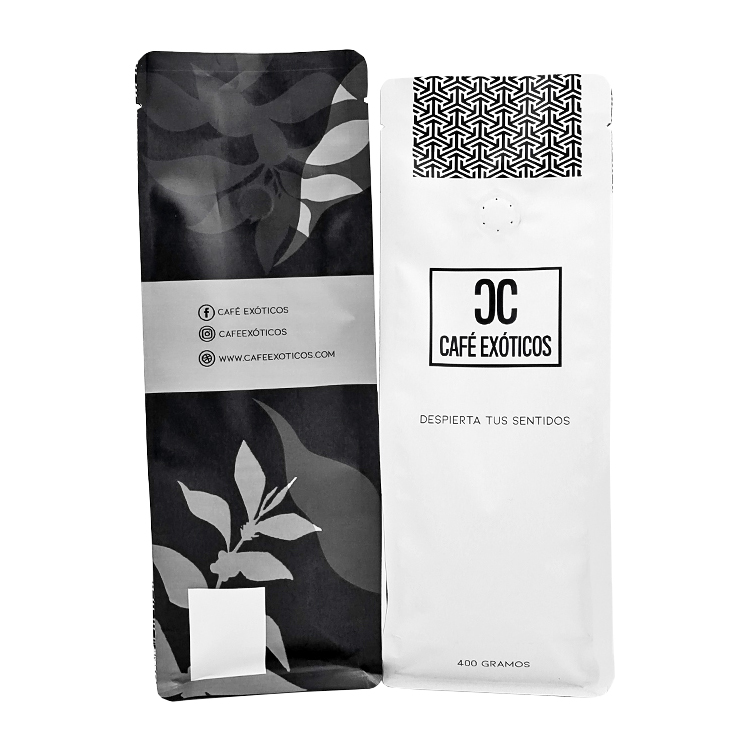
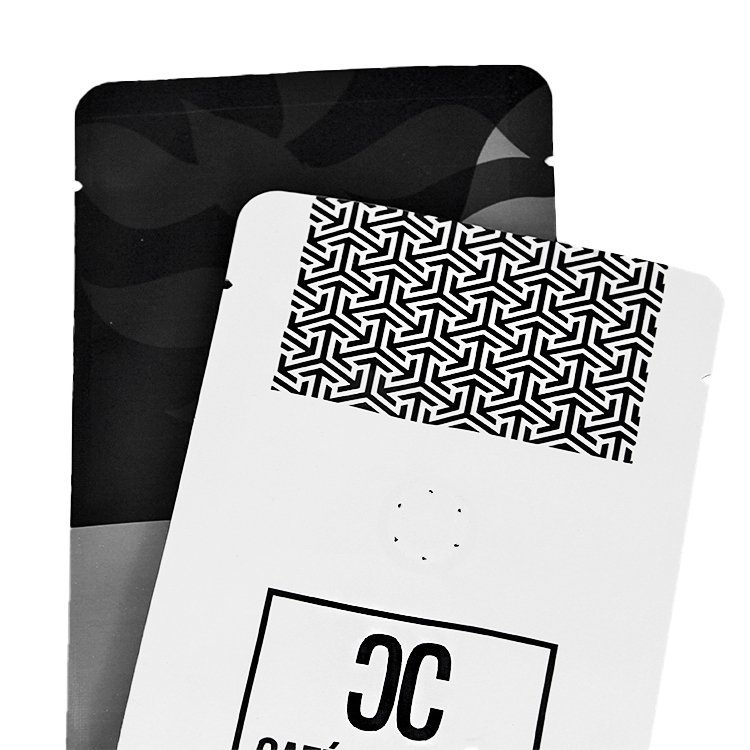
Our 400 g matte flat bottom bag with a valve measures 10 × 28 + 7 cm. We made it using MATOPP / VMPET / PE at 130 µm with gravure printing and a one-way degassing valve. The light front and dark patterned face provide a useful artwork reference for this taller flat bottom configuration.
We also made a 1 kg MDOPE/PE side gusset bag in 14 × 40 + 7.5 cm. It uses 120 µm film, gravure printing and a PE degassing valve. Its material, folds and dimensions describe another configuration, not a larger version of the same flat bottom bag.
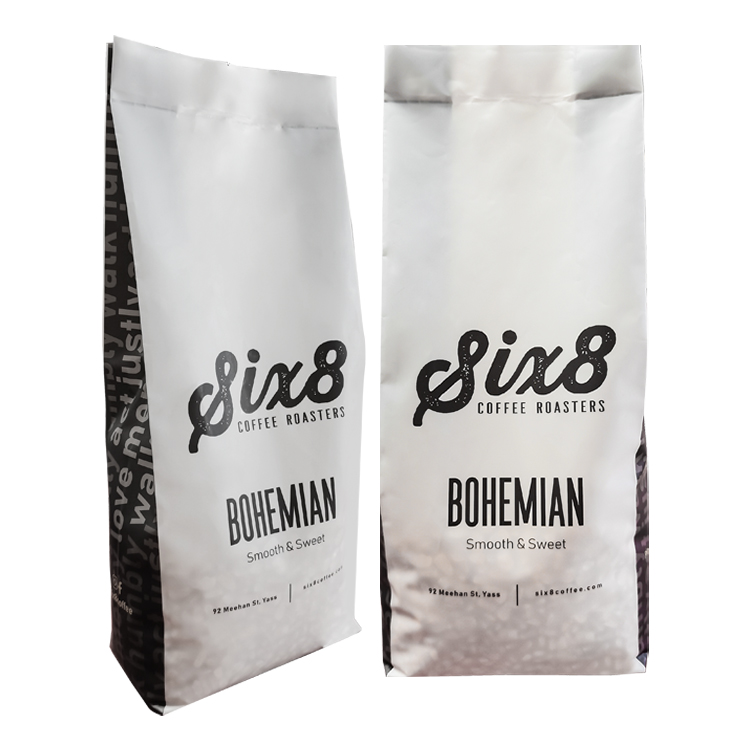
Notice that the larger coffee fill uses a different material at a different thickness. Capacity does not provide a thickness rule or a price ranking. If you want us to compare a retail and wholesale range, list each configuration separately and explain its packing and delivery requirements.
Design and samples: what is free and what is quoted
You do not need to budget for a finished design before contacting us. We offer free coffee packaging design with unlimited revisions, followed by free layered production files after design approval. Send a logo, existing bag or description of the direction you want.
Separate that design support from physical samples. Similar-material samples are free. They can help you compare material feel, a finish or details already present on the reference bag. Their dimensions and artwork may differ from the custom bag you intend to order.
A custom sample has an agreed scope and fee; the fee is refunded when you place an order. Confirm what the sample represents before arranging it. If the main question is your filled shape, the size and features are central. If the question is a particular color on a chosen material, discuss the suitable printed reference or sample.
Sample shipping is quoted by destination. Include the receiving country rather than assuming that free sample material includes free transport. Keep the sample charge, shipping and refund terms visible in your comparison so the first payment and later order treatment are clear.
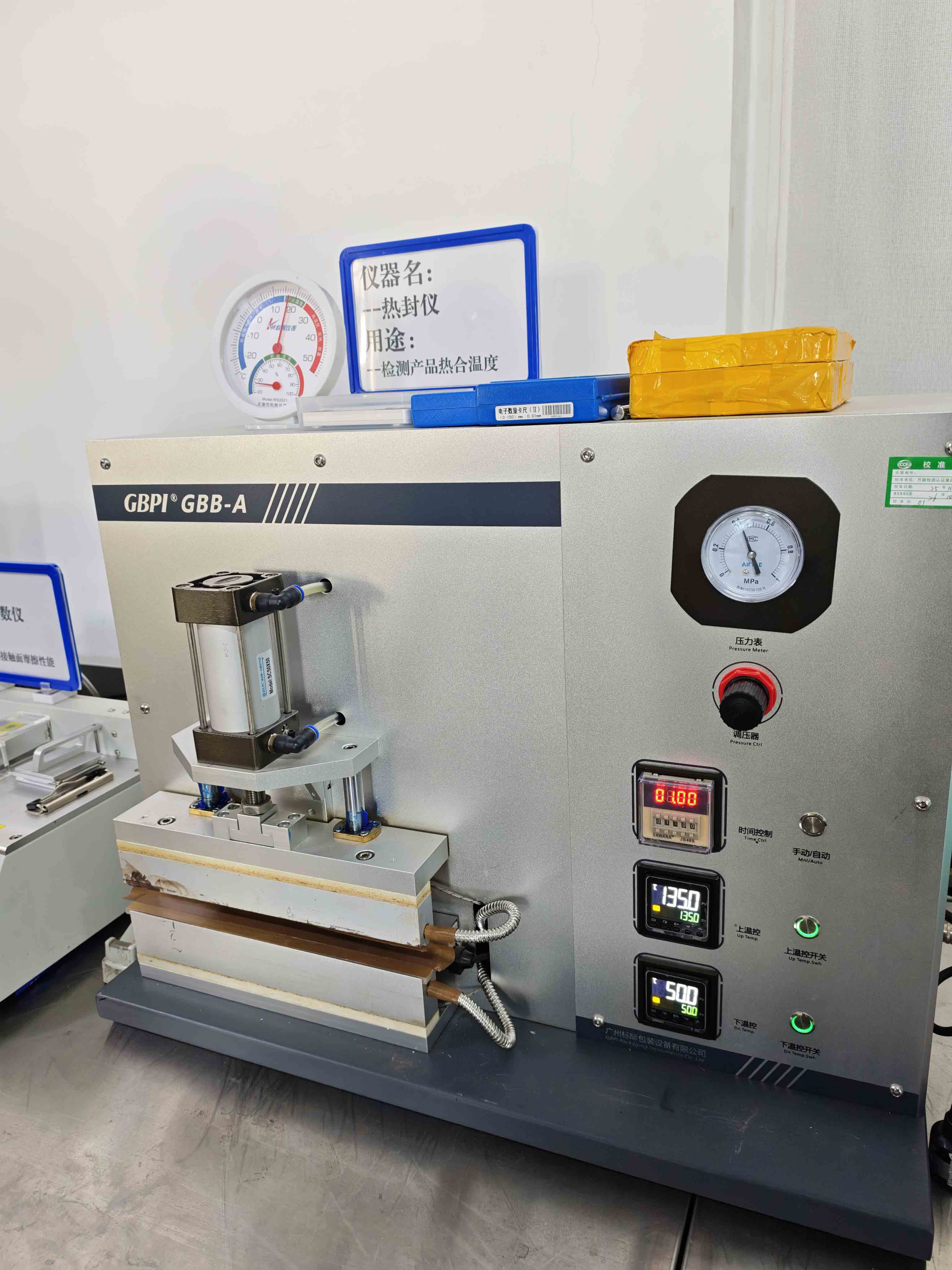
Use the sample-testing guide to review filling, sealing, opening and handling. A relevant sample can help you settle the specification before the order is priced as final. It is especially useful when a lower-cost alternative changes the physical bag.
Delivery, cartons and timing
Shipment weight, volume and destination
Delivery is part of the cost comparison when you want bags at your receiving location. Provide the destination country and relevant receiving details. Confirm the transport arrangement, the charges included and any separately quoted items.
Finished empty bags still occupy space in cartons. Shipment dimensions and weight matter alongside the receiving destination and selected service. UPS's glossary explains that dimensional weight considers the space a package occupies relative to its actual weight. The applicable calculation and charges belong to the carrier and service being quoted; do not assume one generic bag weight settles the freight price.
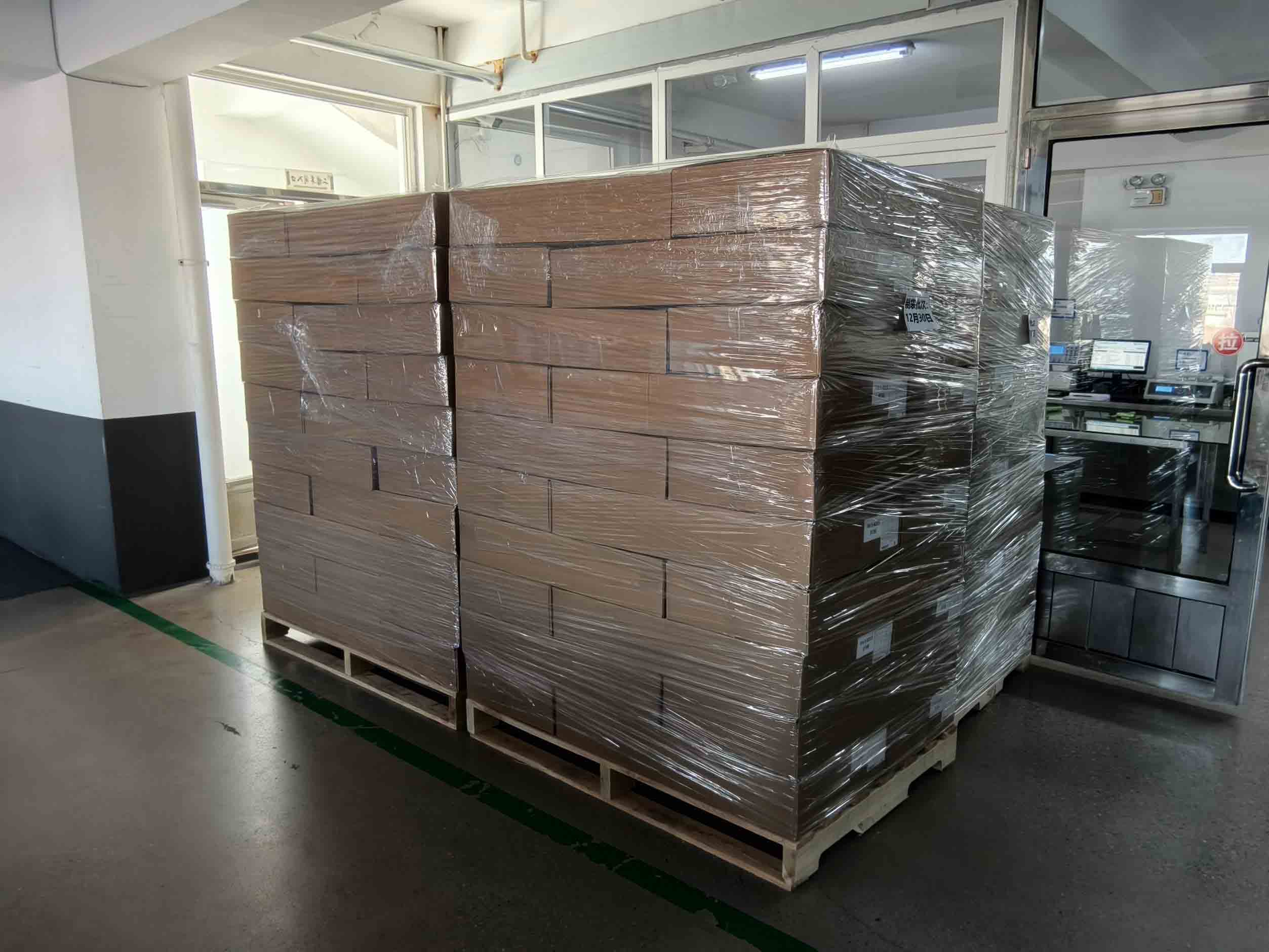
Tax-included door-to-door delivery is available. Ask which charges and receiving arrangements are included for your destination, and keep that scope the same when comparing options. Sample shipping and delivery of the finished order should be discussed separately.
If you are comparing another supplier's quote, identify whether it covers bags only or delivery to a named location. A lower bag price can sit alongside a different transport scope. Compare the totals using the same assumptions before attributing the difference to manufacturing.
Preparation, production and shipping
Production is 7–12 days; shipping is 7–10 days as a separate stage. Design development, approval, print preparation and sample arrangements also belong in the project plan. Give us the date you need the bags, rather than counting only the production period backward from a launch.
Changes can affect that plan. A revised dimension or material may require another sample, while new artwork can change print preparation. Discuss the quotation and schedule together when an option changes so both still refer to the same approved bag.
For a repeat order, send the previous approved specification and artwork version early. That helps identify whether the project is a repeat or a revised configuration. Confirm the current quantity, preparation and delivery terms rather than relying on an old total or expected arrival date.
Compare options without losing the requirement
Begin with one specification that meets your coffee and packing needs. Call it your reference option. Then ask for alternatives that change an identified element while preserving the requirements that matter most.
For example, you can compare two print routes on the same bag, then review a different laminate as another option. If the alternative changes both the material and zipper, name both changes. This gives a price difference a practical explanation and helps you decide which sample review is needed.
| Comparison step | Keep clear | Decision to make |
|---|---|---|
| Establish the reference | Coffee, usable size, bag structure, print, features and destination | Does it meet the intended job? |
| Change one element | Identify the revised material, feature or process | What does that change improve or affect? |
| Review the quotation | Same quantities and delivery scope; preparation identified | Is the total difference explained? |
| Review a relevant sample | The changed element and your actual packing method | Is the alternative suitable? |
| Approve the selected option | One current specification, artwork set and quote | What exactly will be produced? |
Avoid comparing only the names of the bag formats. A simpler-looking silhouette can still use a different laminate, print arrangement or feature combination. Ask for a quotation on the complete configuration that you would actually order.
If you have a budget, state it together with your priorities. Explain which details you are willing to reconsider and which requirements must remain. We can discuss the useful alternatives without turning an optional appearance preference into a change to an essential filling or protection requirement.
Send an enquiry that produces a useful quote
Include the coffee type and net weight, preferred format, dimensions or current sample, material direction, finish, valve and closure. Add the total bags, quantity per printed design and destination. Share existing artwork or ask for free design help.
When choices are open, name them as options. Ask for the material layers, preparation items, sample terms and delivery scope to be identified. If you need measured performance or specific documents, include that requirement at the quotation stage so the proposed configuration can be reviewed against it.
Keep the final quotation with the approved bag specification, artwork versions and sample reference. Together, they explain the product you chose and the costs you agreed, making the next order easier to compare.
Frequently asked questions
Can I request a quote before choosing the material?
Yes. Tell us the coffee, net weight, packing method, storage and distribution needs, quantity and destination. We can propose material options and identify the specification behind each quote. A useful initial comparison can then become a final quotation after the choices are settled.
Should I send a competitor's price?
You can share a quote you want to compare, together with its bag specification and included charges. The useful information is what the price covers. Ask us to identify differences in materials, quantities, features and delivery rather than assuming that similar product names describe identical bags.
Can a small dimension change leave the artwork unchanged?
The original graphics may still be useful, but review the layout on the revised drawing. Panel widths, folds, seals and feature positions can affect the design. Keep the new specification and approved artwork version together before production.
Further Reading
Request a quote for your coffee bags
Send us your coffee net weight, quantity per design, bag reference and delivery country. Tell us the features you need and the options you want to compare. We can help choose the configuration, develop the design free of charge and prepare an itemized quotation. Request your coffee bag quote.