
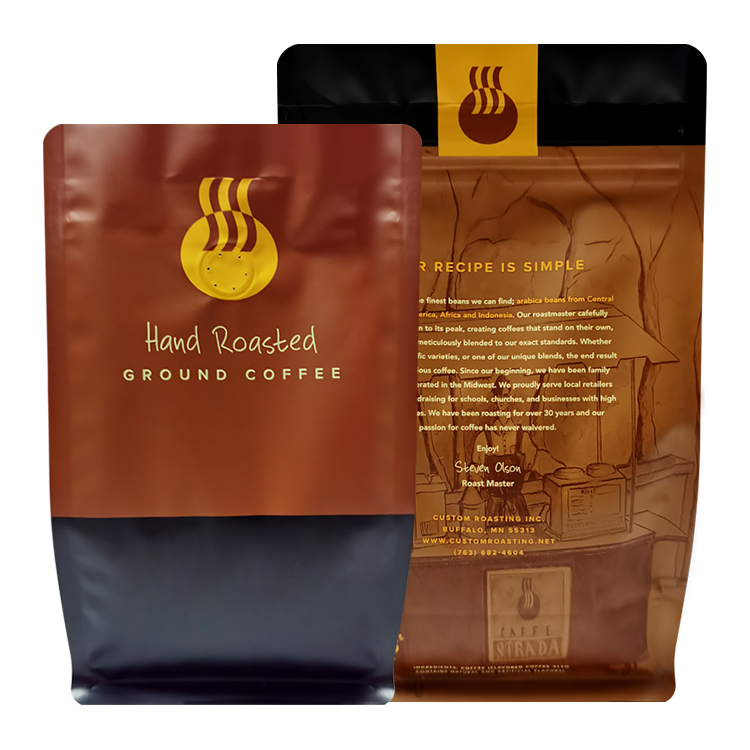
The useful question is what will happen inside the sealed package after your filling step. Tell us the coffee form, roast-to-pack schedule, net weight and bag you are considering. Those details help us review whether a valve is appropriate and how to arrange it around filling, sealing and opening.
We make valved coffee bags in flat bottom, stand-up and side gusset formats. Below, we use real configurations to explain the choices without assigning the same valve or waiting period to every coffee.
Make the decision from the coffee and packing timeline
Whole beans packed while gas release continues
Roasting produces gases, including carbon dioxide, some of which remain within the beans and are released afterward. Research by Smrke and colleagues examines that release from whole-bean and ground coffee. The study shows why coffee form and roasting conditions belong in the packaging discussion rather than being treated as interchangeable.
For your own whole-bean product, describe when the beans are roasted and when they are filled and sealed. If you pack while gas release continues, a suitable valve gives you an option for controlled release from the closed bag. Review it as part of the complete package, not as an accessory selected after all other details are fixed.
Tell us if the schedule changes across your range. A bag used for one regular roast may also be used for another coffee packed at a different interval. Identify those conditions when discussing the common specification so your sample review represents the coffees you intend to pack.
Ground coffee and the grinding-to-sealing interval
Grinding changes the gas-release pattern. Smrke and colleagues report faster early release for ground coffee under their study conditions, compared with whole beans. That does not establish that every ground coffee is ready for a valveless bag. The amount remaining when you seal depends on your actual sequence.
Write down when grinding happens relative to filling. “Ground coffee” can mean coffee ground shortly before it is sealed or a product held for a period before packing. Those are different briefs. Include the intended grind and explain how grounds travel through the filling equipment.
Particle behavior also belongs in the valve discussion. Ground coffee requires review of appropriate particle protection for the selected model and application. Ask which valve is proposed and what information supports that use; do not assume a valve chosen for whole beans has an identical ground-coffee configuration.
We have produced valved bags for ground coffee, including the 12 oz flat bottom example shown here. Use that configuration as a starting reference while specifying your own grind, fill and packing interval.
Coffee held before packing
If coffee is held before filling, describe how it is held, the time interval and the point at which the bag is sealed. Elapsed time alone does not approve a valveless configuration. Bring the product and schedule into the sample review before relying on a general waiting rule.
Avoid selecting a fixed number of days from another roaster's package. That number may relate to a different coffee, process or goal. Your delivery and selling schedule should be discussed alongside the condition of the coffee when it enters the closed bag.
| Your situation | Information to bring | What to review |
|---|---|---|
| Whole beans packed after roasting | Roast-to-fill and roast-to-seal interval; intended weight | Continuing gas release, proposed valve and complete bag |
| Grounds packed shortly after grinding | Roast, grind and seal sequence; grind and filling method | Remaining gas and appropriate particle protection |
| Coffee held before packing | Holding conditions and time; coffee form | Whether the proposed valved or valveless package suits that sequence |
| One bag used for several coffees | Each product and its realistic packing conditions | Whether the common specification and sample scope cover the range |
Understand the separate jobs of valve, film and seal
Controlled gas release
A one-way degassing valve is designed to open under its specified pressure conditions so gas can leave, then restrict reverse airflow as it closes. Valve manufacturer Plitek describes the principle of an outlet for accumulated gas in coffee packaging. Ask for the selected model's information rather than treating all valves as one standard device.
A hole alone does not provide that controlled function. A valve also does not remove oxygen already inside the bag after filling. If your packing process has a residual-oxygen requirement, discuss that process and its evaluation separately.
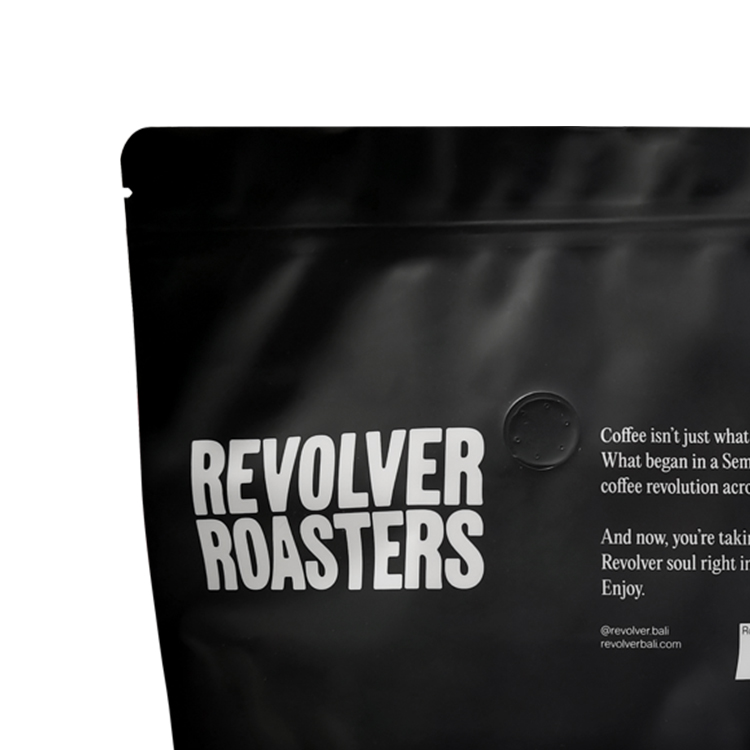
Use this arrangement as a design reference, then agree the model and placement for your project. Choose opening-pressure and flow requirements from the selected component's information and the evaluation appropriate to your package.
Barrier protection and the original seal
The material structure surrounds the coffee; the original heat seal closes the filling opening. A valve manages gas release through its own path. These jobs need to be considered together when you choose the package.
Keep the material description complete. A matte surface or kraft exterior is an appearance preference, while the laminate identifies the films or paper layers proposed for the bag. VMPET is metallized PET and should not be described as an AL aluminum foil layer.
The materials and barrier structures guide helps you prepare those requirements. If you need measured barrier or seal performance, specify the relevant method and conditions rather than selecting a bag by a generic freshness claim.
A reusable zipper serves another stage: reclosing the bag after first opening. It does not replace the original heat seal or establish the same unopened-package protection. Review the zipper and reclosure choices with the valve, opening and filling arrangement.
Compare valved bags we have made
A 12 oz ground coffee flat bottom bag
We made our matte flat bottom bag for 12 oz ground coffee using MATOPP / VMPET / PE at 140 µm, with gravure printing, a degassing valve and a pocket zipper. Its dimensions are 13 × 22 + 8 cm; the intended coffee net weight is 12 oz, approximately 340 g.
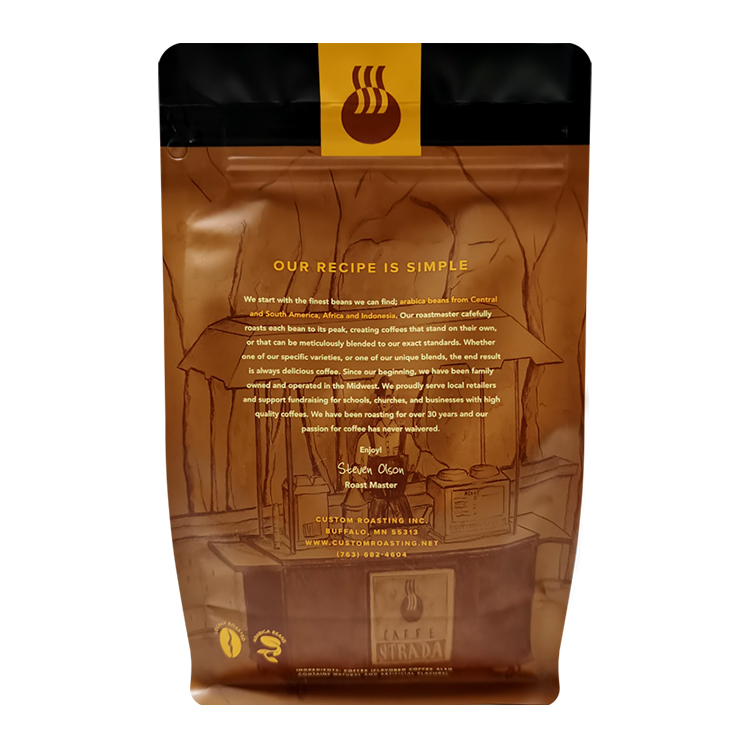
This project shows that ground coffee and a valved flat bottom configuration can be combined. For your own bag, compare the filling opening and usable space, then discuss the valve specification appropriate to the grounds. The pocket zipper should be reviewed for first opening and reclosure as well.
The film thickness and coffee net weight remain separate: 140 µm describes the laminate; approximately 340 g describes the coffee fill. Keep both fields in the brief instead of using a familiar capacity name as a full specification.
A 12 oz mono-PP whole-bean bag
Our digitally printed mono-PP flat bottom bag for 12 oz beans uses MOPP / VMOPP / CPP at 140 µm. We made it in 12.5 × 24 + 7.5 cm with a zipper and degassing valve.
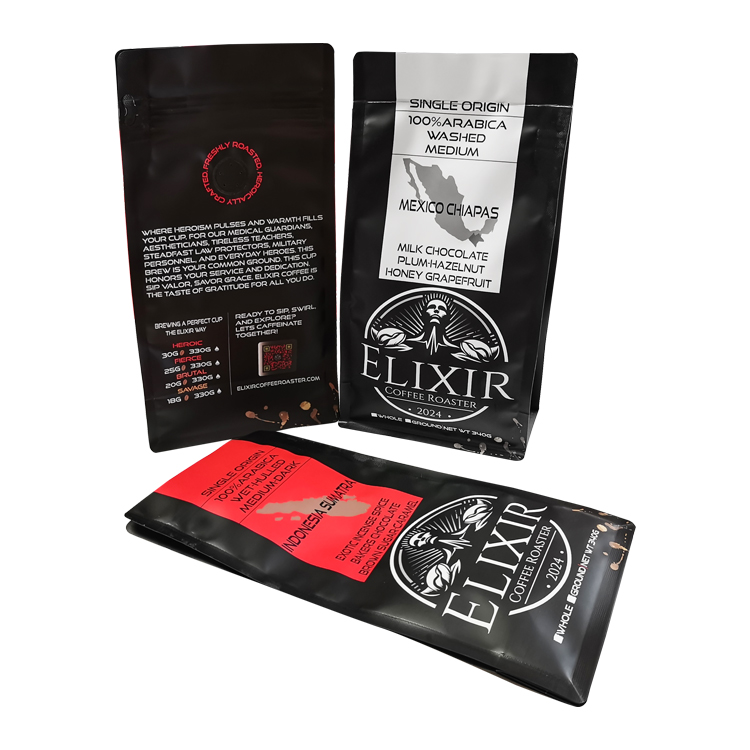
Compared with the ground-coffee example, it has a different structure, size, printing method and closure description. The same nominal coffee weight does not make the two bags interchangeable. Start with your coffee form and packing method, then review the dimensions and features you would actually use.
MDOPE/PE and white kraft/PLA configurations
Our soft-touch stand-up pouch combines MDOPE / PE, 120 µm film, gravure printing and a degassing valve in 23 × 18 + 5 cm. It is a reference for a valved PE-family bag with a broad pouch design. The selected valve and application for your order need to be agreed with that material.
We also made a white kraft/PLA flat bottom bag for 2 lb beans in 12.5 × 37 + 8.5 cm. The specification is White Kraft Paper / PLA (PLA+PBAT), 140 µm, gravure printing and a PLA degassing valve. Two pounds is approximately 907 g.
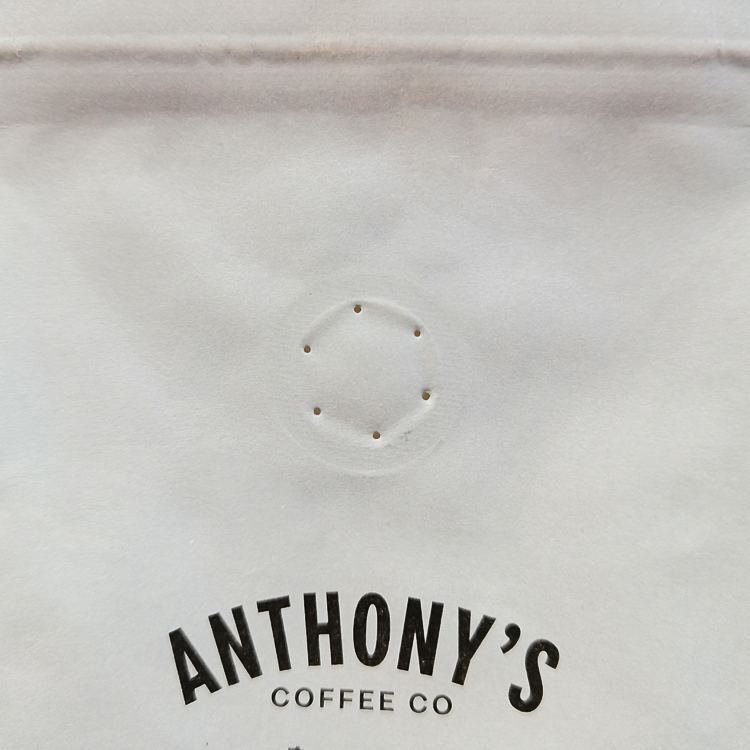
This shows another material-and-valve combination we have made. If you are considering a disposal objective, ask for the complete structure, accessories and relevant supporting information for your market. A PLA component does not by itself approve a complete bag for a home compost pile or local collection program.
Select the valve for the proposed coffee and bag
Particle protection and model information
Describe the product that will contact the inside of the bag. For grounds, include the grind and filling method, and ask whether the proposed valve uses suitable particle protection. Plitek lists a filtered ground-coffee option, illustrating why the component discussion should identify the actual model and application.
Request the information relevant to your requirements: the valve identity, application method and any opening, flow or reverse-leakage performance information needed for your package. If you need measured results, agree the method and conditions before approving the component. A generic description such as “coffee valve” leaves those requirements open.
Do not transfer numerical settings from a different model. A value in a valve manufacturer's brochure applies to the identified product and its stated conditions. Your specification should name the proposed component and the information that will be used to assess it.
A ground-coffee valve discussion should also consider how the product reaches the valve area during filling and handling. Share observations from your own setup, including any fines around the opening. We can review the proposed position and configuration with that information rather than choosing by coffee net weight alone.
Application and material compatibility
The valve has to be applied to the selected bag material. Agree the component and application alongside the complete laminate, bag construction and feature positions. If the material changes during development, include the valve arrangement in the review of the new specification.
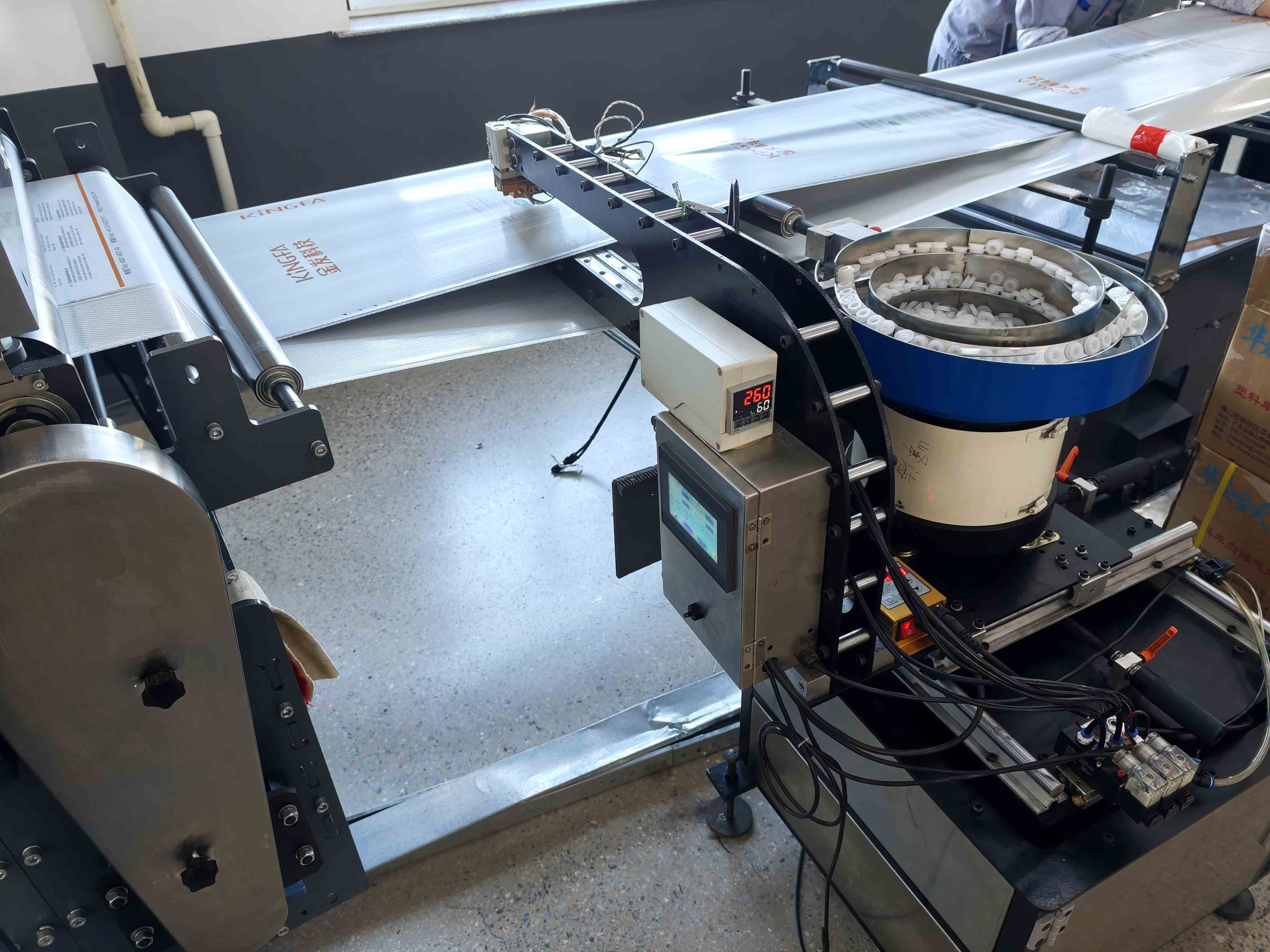
If your brief includes a PE-family, PP-family or PLA-based direction, ask for the complete bag and component details. The intended disposal route also needs the relevant documentation and acceptance conditions. Material direction and valve compatibility are parts of that discussion, not a universal collection instruction.
We can share applicable factory certifications and food-contact information on request. Tell us the intended market and configuration so the documents can be reviewed for your project. Keep the agreed valve and bag references with the final specification for future orders.
Plan the fill level, valve and opening together
Filling access and usable clearance
Choose the bag around the actual coffee fill and packing method, then arrange the valve on its drawing. Consider the coffee level, filling path, folds, top seal and selected closure. A position from another bag is a useful visual reference; use the clearances agreed for your own construction.
The filled coffee level is more useful than an empty-bag photograph when reviewing access and clearance. Check how the product settles and how the bag is held during filling. Explain any part of the opening or upper panel that your equipment grips, folds or seals.
If the coffee comes close to the area needed for the valve, closure or final seal, discuss the dimensions before finalizing the artwork. A change in usable height or panel arrangement can be considered together with the rest of the bag. Treat it as a specification choice rather than simply moving a printed graphic.
Review the top seal separately. Keep the seal area clear during packing and evaluate the material on your equipment. Grounds or wrinkles in that area can complicate closing, so record what happens in your real process and use the observation to refine the proposed configuration.
Artwork and reclosure
Give the valve a defined location in the design. The front or back position should be considered with product wording, logos, printed codes and opening instructions. Our designers can arrange the artwork around the agreed features rather than covering an important information area afterward.
For a bag with a zipper, describe how the customer first opens the sealed package and then recloses it. The valve, tear or pull-tab area, zipper and top seal need their own roles. Review the opening sequence with the physical bag so important instructions remain available where needed.
A front valve can sit within a decorative design, as our ground-coffee example illustrates. Another layout can put more information on the back or sides. Start with the way you want the bag presented, then mark the valve and closure positions on the current drawing.
If the size or material changes, review the feature positions and artwork again. Keep one current layout with the final bag specification, so a later order has a clear reference for both the printed design and physical arrangement.
Review samples under your packing conditions
Record the coffee and sequence
Choose a sample that represents the decisions you need to make. A similar-material bag can help with general feel or an existing feature arrangement. To review your particular fill, valve position and closure, agree how those details will be represented in the sample.
Use your intended coffee and realistic packing sequence. Record the roast date or interval, grinding step where relevant, net fill, sealing conditions and sample identity. If several coffees will use the bag, identify which products and schedules are included in the review.
Record the time of the final seal separately from the time coffee first enters the bag. Filling a group of bags and sealing them later creates an interval that a simple roast date will not describe. Note ordinary pauses or holding steps that are part of your process. The review can then be repeated with the same sequence, rather than relying on a general statement that the coffee was packed that day.
Keep the bag drawing and component reference with that record. If you compare two candidates, label each filled sample and photograph before moving them into cartons. Identify which variable you changed, such as the valve model or its position, and keep the other recorded conditions consistent where practical. That makes the observations easier to discuss with our team.
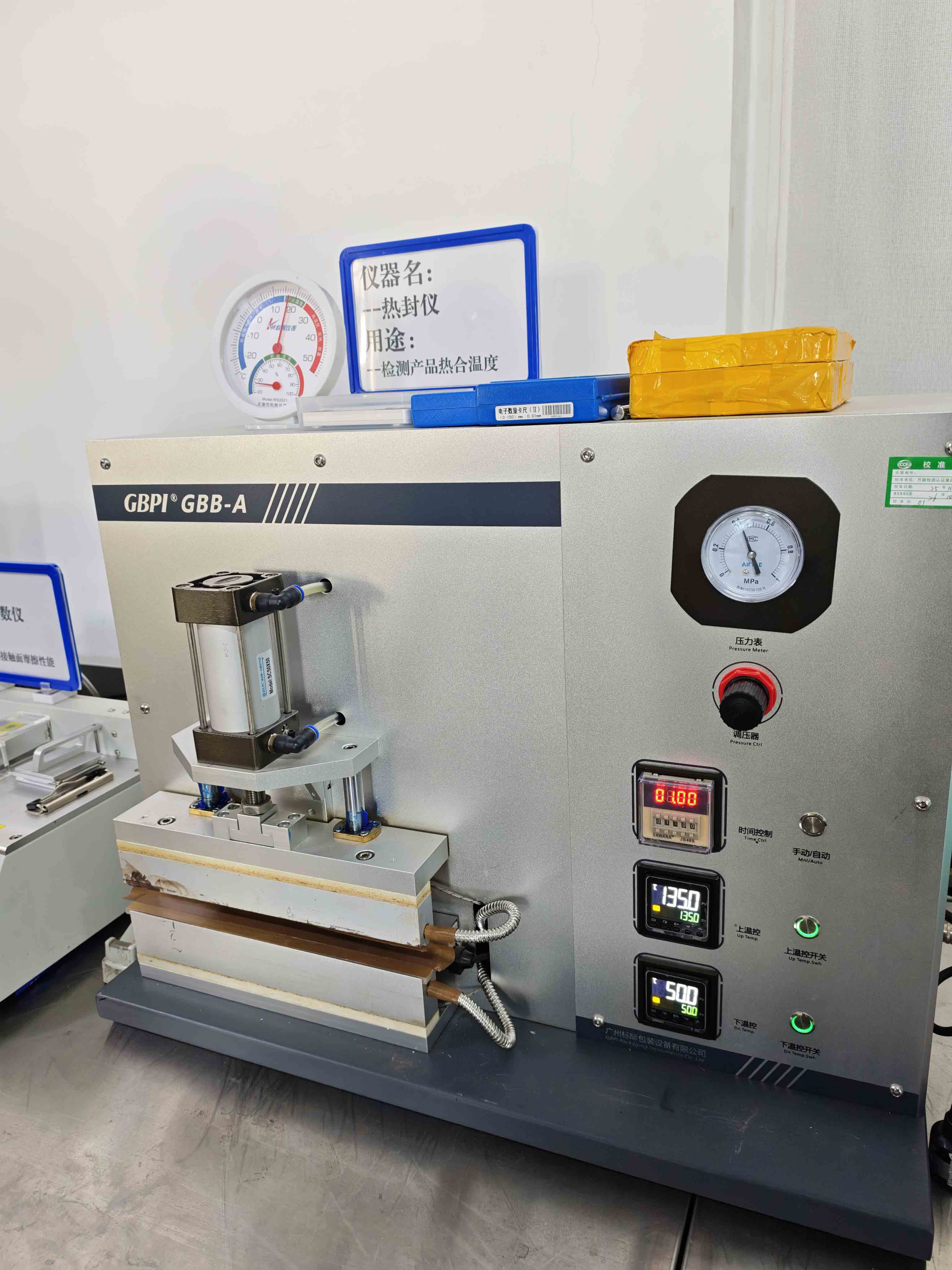
Keep filled photographs and a short record of observations. The coffee bag sample guide covers filling, sealing, opening and handling. For the valve, identify any measured requirement and agree its evaluation separately from a visual fit check.
| Review | Record | Decision it helps settle |
|---|---|---|
| Coffee condition | Whole bean or ground; roast and grind timing | Which product and sequence the sample represents |
| Fill and seal | Coffee weight, filled level and sealing setup | Usable space and sound closing arrangement |
| Valve application | Component reference and agreed position | Whether the sample matches the proposed configuration |
| Handling and storage | Conditions, dates and changes observed | Which issues need further package review |
| Opening and reclosure | Actual first-open and reclose sequence | Consumer access to the selected features |
Samples of similar materials are free. Custom sample fees are refunded when you place an order; sample shipping is quoted by destination. Tell us what you want to check so the sample scope and any fees can be arranged around those questions.
Investigate swelling without guessing the cause
If a filled bag changes shape, keep the sample and record when you noticed it. Include the coffee, packing interval, fill, seal settings, bag specification and storage or handling conditions. Send front, back and side photographs along with that record.
Ask us to review the complete package. The gas-release discussion, selected valve, its application, filling and seal arrangement all belong in the review. Agree any measured valve or leak evaluation needed to identify the issue instead of repeatedly squeezing the bag as a substitute for a defined check.
Include where the package was handled when the change appeared: at the filling station, during storage or after transport. Retain the carton arrangement and any available handling notes with the sample reference. These details help define the next review question without turning one observation into a conclusion about every bag in the order.
Likewise, a flat-looking bag is only one observation. Keep the same record for bags whose appearance does not change and assess the configuration against the requirements agreed for your coffee. A short visual trial should not be turned into a shelf-life declaration.
If the review leads to a different valve, material or position, identify the revised configuration clearly. Decide which sample or performance checks need to be repeated for the affected change. That keeps the eventual approval attached to the bag you will order.
Prepare a valve specification request
Send your coffee form, roast-to-pack timing and the grinding-to-sealing interval where applicable. Include the target weight, bag format, dimensions if known, material direction, filling equipment and closure preference. Tell us any storage, delivery or measured-performance requirement you have established.
Add the quantity for each design, artwork status and receiving country. A logo or a reference bag is enough to begin. Our degassing valve page explains the component and layout choices we can discuss with your project.
Free design includes unlimited revisions and free layered production files after design approval. We can help position the artwork around the selected valve, folds, seals and opening. Physical sample preparation and the other quoted production items are considered separately.
For a reorder, identify the previously approved bag and valve and list any change to the coffee form, packing schedule or physical specification. A switch from beans to grounds deserves a review even if the logo and net weight remain familiar. This is a useful point to resolve before treating the order as an unchanged repeat.
Frequently asked questions
Can one bag specification cover both whole-bean and ground versions?
Ask us to review both products and packing sequences against the proposed bag, valve and fill. Keep them clearly identified in the brief. Shared branding and weight can be convenient, but the common configuration and sample scope should account for the actual differences.
Should I leave the zipper open to help the coffee vent?
Follow the agreed packing and closing sequence. An open zipper or unsealed filling opening is a different package condition from a sealed bag with a selected valve. Discuss the gas-release need through the coffee schedule and valve specification while preserving the required final seal.
Does using nitrogen remove the need to discuss a valve?
No. Tell us if nitrogen is part of your packing process and describe the sequence. Residual oxygen and gas released by the coffee are different questions. The proposed package still needs review with the actual coffee, seal, material and valve arrangement.
Should the printed storage instructions mention the valve?
Use storage instructions appropriate to your coffee and customer use. If an opening or reclosure step needs explanation, make it clear in the artwork. Avoid treating the presence of a valve as a promise of a fixed freshness period after the bag is opened.
Further Reading
Discuss the valve for your coffee bags
Tell us whether you pack beans or grounds, when filling and sealing happen, and the net weight you want to sell. Add your bag reference, quantities and destination. We can help choose the valve, material and opening arrangement, then develop the design around the agreed configuration. Discuss your valved coffee bags.